Saturday, December 19, 2009

Flashback Challenge


Flashback reading challenge For the Flashback challenge, I'm going to do the literati level, which is to reread over six books.

Books read:
A Cricket in Times Square (first read in college, oddly enough)

Here are the books I plan to read:
Wuthering Heights (a book I first read in junior high, then again in college)
Jane Eyre (a book I first read in college)
A Tree Grows in Brooklyn (a book I first read in high school, then used for part of my thesis in college)
Daphne's Book (a book I first read in elementary school)
Vanity Fair (first read in college)
Heidi (first read in elementary school)
The Secret Garden (first read in elementary school)
The Great Gatsby (first read in high school, then again in college)

I'm sure I'll also reread at least one book by Jane Austen.

This challenge runs through the end of 2010.

Wednesday, December 16, 2009

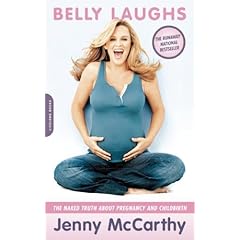
Belly Laughs


This is the book I actually meant to read when I read Baby Laughs. I am writing, although I use that term losely since it's more like "I wrote 15 pages and then stopped and am 'researching' for a part of the book I'm not even to yet" than actual writing at that moment. As part of that research that is really just procrastinating, I read Belly Laughs by Jenny McCarthy. Since I've never been pregnant, I wanted some information about it, and I thought McCarthy might share things the more scientific books don't share, things that I would want to include in my book. There are definitely surprises in the book that do not make me any more inclined to go the mommy route myself. It's all quite gross actually. But I love that McCarthy just bares it all (I guess she's used to that! Ba dum bum bum). I do think this would be good for anyone going through pregancy for the first time, to know that what they are experiencing is normal. She's also funny. I do think it's sad though that she's no longer with her husband from the books. Anyway, if you know someone who is expecting or thinking about getting pregnant, this is a great one to recommend.

Friday, December 11, 2009

Twenties Girl

Twenties Girl is Sophie Kinsella's (of Confessions of a Shopaholic fame) latest book. It's a ghost story, oddly enough. Not a creepy ghost story, but a Kinsella-style ghost story that's fun and entertaining.
Lara is a modern, 27-year-old who has to go to a funeral for her great aunt Sadie, who she's never met. At the funeral, Sadie's ghost starts haunting her. The ghost takes the shape and personality of Sadie at 23, who was then a flapper in the roaring '20s. She's hilarious, and the clash between the '20s and modern day is hysterical, especially since Sadie's a lot looser than Lara. It's pretty funny.
I also liked that this story made me think of what my grandmother was like when she was young. She wasn't a flapper or anything, much to young for that, but the relationship between the two girls made me think of my grandmother, who I'm really close to. Lara growing closer to ghost Sadie connected her to her family more and led to other events that helped honor Sadie's life.
So, if you like a good, funny, quick read, pick up Twenties Girl.

Best Friends Forever

I almost turned this back into the library without posting a review. Oops. I picked up Best Friends Forever by Jennifer Weiner when I wanted to read something a little more light-hearted. This ended up having a main character who tragically lost both of her parents, might have cancer, was picked on in school and lost her best friend her last year of high school for trying to defend her, and has a brother who was in a tragic accident that left him brain damaged. So not the best pick for something light and fluffy, but like all of Weiner's books, it was still funny and uplifting. It made me miss my best friend from high school though. We drifted apart after graduating, like most people do. We shared so much when we were younger, she even went on vacation with my family and celebrated Easter with us, and now we barely ever see each other.
I did enjoy this book and I would recommend it to people who like Weiner, but if you haven't read anything of hers I would start with Goodnight Nobody or Little Earthquakes first.

Thursday, December 10, 2009

More Than It Hurts You

More Than It Hurts You by Darin Strauss is a difficult read on two levels: the rhythm and language is just a bit off somehow, and it's about a family where the mother is suspected of Munchhausen by proxy. That topic is more real to me today than it was a few years ago, making the book more believable and sad. There's this guy that I went to church with, and had a giant crush on in like eighth grade when he was like a senior in high school, ended up marrying this girl who had it. She was caught on tape injecting their daughter with feces. I was horrified when I saw that on the news, and even more shocked when I realized I knew the husband. He's a nice, normal person with a good family and an upper-middle class upbringing. You would never expect that to happen to him.
Anyway, the other reason why it was difficult to read is that there was just something odd about the rhythm of the language, and the changing of the narrators. I kept getting thrown out of the story. It's like it kept reminding me that I was reading, not experiencing, so it was harder to stay connected. A little over halfway through I either adjusted or he changed the style some. From then on, I read really quickly and ended up really enjoying it. I think because I enjoyed Chang and Eng so much I expected to love this one right from the start, but it's like they were written by two different people.
I did really like the character of Darlene Stokes, the doctor who suspects Munchhausen by proxy. She seemed real, and I identified with her even though we don't have much in common. Because I identified so strongly with her though, I think it made me like Josh and Dori, the parents of the sick child, even less. I also didn't like the element of the story told through Darlene's father. It was just distracting to me.
Here are some things I did like though:
"She hadn't foreseen the loneliness of the young scholar at an American university, however. Bookishness, hardheaded intellectualism, an affection for time-consuming study, the very qualities for which she'd thought she would've been, at last, rewarded - these things her classmates met with an amused ill will."
That's a quote from Darlene, and is one of the reasons I liked her. I had thought college would be the place where I could finally "come out" as an intellectual, where everyone would love books as much as I do, where we'd stay up late having philosophical debates. Yeah, I married one of the few people I met who actually liked doing those things, and even he doesn't read very much. Most of the people I went to school with didn't know how to think critically and didn't care about anything other than getting a piece of paper with a degree stamped on it and having a good time.
Here's another good Darlene quote:
"Some people's minds just close for business after college. Once Leo graduated, he would never read a challenging book again..."
Sadly, it's seems like that's true of most people. I hate that.
I also liked that Darlene was a successful black doctor, and felt that the book dealt with the racism issue well. She talks about how people assume she's in her position as head of the Pediatric ICU because of affirmative action and how much that stings.
Okay, all of the things I like are about Darlene. Apparently the books should just been about her. Here's another one: "The sexification of kids, the toddlerizing of adults: Everyone in America would look, act, think, and covet like an eleven-year-old before long..." So true. We treat kids like they're capable of making adult decisions, dress little girls in skanky outfits, encourage sex at young ages, abortions for underage girls without parental consent, etc. Yet we treat adults like kids, like there isn't anything called personal responsibility. And then this just made me laugh. Darlene's talking to another parent: We'll have Coldplay CDs at the birthday party," Mrs. Hechler was saying, laying the accent on Coldplay like someone dropping word 'Harvard.'" Mrs. Hechler then talks about how proud she is that her daughter requested that, like she's the brightest kid ever because she likes crappy music that everyone else likes.
Okay, just one more thing about Darlene: "Guilty pleasures have become proud pleasures." We've become proud of what we used to be embarrassed about: adults watching crap like Gossip Girl and reading the Twilight series (lamest ending EVER. EVER. LAME.), having odd sexual interests, sleeping around, not doing our homework, slacking off at work. We brag about these things now.
I'm glad I marked these passages as I went along. Before I start looking at them again, I was having trouble remembering why I liked the book in the end. Now I remember: Darlene is awesome. Read the book for her. You'll have to push through the first few chapters though, they were not very interesting. Push through to page 63 - that's the first time you get Darlene's point of view. It's worth it for her.

More Than It Hurts You also counts for a book from 2008 for the Countdown Challenge.

Wednesday, December 9, 2009

Only 5408 More Books to Read?

I was reading Rebecca Reid's blog today and she made a comment about if she continues reading at her current pace, she'll only read about 6,000 more books in her lifetime. I decided to see how many I could expect to read. I average two a week, and estimated that I would until I'm 88. Why 88? It's easy to subtract 28 from 88, that's why. That gives me only 6,240 more books to read! This is spinning me into a panic! Especially when you consider that I could have kids some day and may not be able to maintain my two books a week pace when they are younger. Oh no! I need to read four a week! Yikes. I realize that 6,000 is a pretty big number, but considering that I regularly buy over 50 books at once at library book sales and can't escape any bookstore without buying at least 10, plus I check out a stack at the library every two weeks, this seems really low.
So, I'm going to shoot for 3.5 books a week on average for next year, or 15 books per month. That will give me 10,800 books to read until I'm 88. I'm also going to set a goal of reading every book in my personal library next year, except for some of Ryan's stuff from college.

Friday, December 4, 2009

The Woman in White

I've been meaning to read The Woman in White for a while now, and finally got around to it due to the Wilkie Collins mini-challenge. I also happened to read it near it's 150-year anniversary, which is rather fun. The Guardian ran a great article on it and how successful it was in it's time, rivaling his friend Dickens. Wouldn't it have been great to live in Victorian England and get to read these stories as they came out, eagerly waiting in anticipation for the next installment? Well, I suppose I wouldn't want to give up all the comforts of modern life, so maybe that doesn't sound so great. On a side note, when I was in the middle of this I started watching the new version of Doctor Who and watched the episode featuring Charles Dickens, which was quite fun. Great show.
Anyway, the point is to write about The Woman in White. I loved this book, but for some reason it took me longer than usual to read it. It might just be that I've been reading a lot of contemporary books the last few months and had to adjust to the massive use of adjectives in Victorian books, but I think it also had to do with the narrators. I think this is the oldest book I've read that used multiple narrators to tell the story in this type of format. I could definitely be wrong about that though. Collins switches from narrator to narrator as they enter and leave the story centering around the mystery of the woman in white. He did a good job of capturing the voices of the different characters, but the problem was that some of them annoyed me and I think that caused me to read slower in their parts.
As I mentioned, the story centers around the woman in white, making it one of the first mystery novels. It has a great story, but it sort of peters out at the end. I'm not sure if he had word count incentives/requirements like Dickens (often had length requirements for his serialized segments) and had to round out the end or what, but I found myself almost skimming the last few pages. Overall though, I really enjoyed and felt like it holds up well and it very readable for a modern audience. I would especially recommend it if you like mysteries or novels that use multiple points of view.