It took me forever to get going with Atlas Shrugged, but it was so worth it in the end. Rand's dense sentences pack meaning into every word, unusual for such an immense work. In the beginning, I dreaded picking it back up and had to force myself to keep reading, wondering why I was torturing myself for fun. Everything takes off in the middle though, and it now clearly takes a place in my top 10 favorite books of all time.
I'll admit, for the first 500 pages, I was irritated. It felt like slogging my way through a swamp of philosophy and I kept getting mired down trying to make sure I understood each sentence. I was shocked by the behavior of Hank Rearden and the emphasis on not giving charity and being entirely selfish. I didn't think I could get through a work that was pushing an agenda like that, and it didn't even have any interesting plot or well developed characters at that point to keep me interested.
I actually set the book aside for a few months, something I rarely do. I just recently returned, and forced myself to read a chapter a day. Fortunately, I quickly reached the page 500 mark, and somewhere around there the story took off. By this time, I had become much more connected to the characters and they seemed much rounder, more like actual people instead of stooges for an agenda. The plot also took off, although this clearly never becomes a plot-driven book. I finished the second half of the book in three days.
What happened to turn the book around for me? Two things happened - one was learning more about Dagny and her experience in the corporate world. There are few books out there that cover the corporate world at all, and seeing such an accurate presentation of some of the stuff execs pull was fascinating to read and pulled me further into the story. She's such a strong, driven, intelligent character who just tries to do what's best for her company and she has to fight stupid, lazy, corrupt people at every turn.
The second thing, the thing that made the book for me, is John Galt. The "This Is John Galt Speaking" chapter is incredible. It's a 64-page speech overflowing with philosophy and psychology and economics. Ironically, while it's a chapter focused on rational thinking, I actual teared up while reading it. And I very rarely cry. I returned back to it several times right after finishing it and reread and marked passages.
While there are many, many philosophical ideas to gleam from this section, some of which I don't agree with, some I do, and many that I don't claim to understand, I think the main point boils down to making sure you are using your mind to its fullest. It's about the value of thinking and about how true happiness comes not from escaping our thoughts but through using our mind and thinking.
It also talks about how so much of the world focuses on taking away our desire and ability to think. Too many bosses just want robots who will do exactly as they are told, despite what they may claim to the contrary about wanting "A" players. Teachers often just wants kids to shut up and memorize what's going to be on the test. Even religious leaders often focus on only relying on faith and don't focus on really examining your beliefs. Politicians of course don't want people to think, just to pass control over to them so they can think for us. Most of these people despise being questioned, and too often children are taught to stop asking "why" - either by their parents, caregivers, teachers or all of the above.
I never grew out of the stage, and it's gotten me trouble throughout my life. From second grade, where I wouldn't stop asking why I couldn't work out of the third-grade book since I'd already used the second-grade book in first grade (where my teacher saw my advanced reading schools and bumped me ahead) until finally she gave in after realizing the threat of discipline wouldn't stop my questioning, to more recently in the business world where I've questioned decisions of executives and debated with them. Sometimes this has gotten me ahead, sometimes it's gotten me in heaps of trouble.
Most of the people I've seen who question things in the business world and try to make positive change end up forced out or fired. This is a major source of frustration to me and has caused me to leave positions before as well. That's why I loved this explanation: "Any man who's afraid of hiring the best ability he can find, is a cheat who's in a business where he doesn't belong. To me - the foulest man on earth, more contemptible than a criminal, is the employer who rejects men for being too good." I can sadly name several amazing people who were fired or forced out of a company for just that. It amazes me that this happens, that execs can be so threatened by others who are smarter than them that instead of encouraging them to make advancements for the company, they'll cast them aside because they are intimidated.
John Galt emphasizes that going through life unthinking is essentially sleepwalking through life and you're not truly living. His explanation of happiness so hit home with me and made me clearly explained why I'd been so unhappy at work the last two years in a much more succinct way than I'd ever explained it before.
"Happiness is a state of non-contradictory joy - a joy without penalty of guilt, a joy that does not clash with any of your values and does not work for your own destruction, not the joy of escaping from your mind, but of using your mind's fullest power, not the joy of faking reality, but of achieving values that are real, not the joy of a drunkard, but a producer."
I was so unhappy at work for many reasons, but I think it boils down to that - I was being told not to think, I was helping people who clashed with my values and I was not producing anything of value. Atlas Shrugged reminded me of the vital importance of thinking. It's part of the reason why I wanted to start blogging again. I don't want my reading just to be for entertainment - I want it to make me think and to challenge me. Blogging helps me think through a book and respond to it instead of rushing on to the next one. It also made me want to continue reducing the amount of TV I watch, which has gone down dramatically since I stopped watching several shows and cancelled Netflix. I'm also trying to eliminate other activities that just don't add value to my life so I have more time to focus on things that are important.
While you probably won't agree with Rand's philosophy of Objectivism and may have to force yourself to get through the first part of the book, I promise it's worth it to give Atlas Shrugged a try.
Showing posts with label literary fiction. Show all posts
Showing posts with label literary fiction. Show all posts
Sunday, December 11, 2011


Saturday, August 7, 2010
Anna Karenina
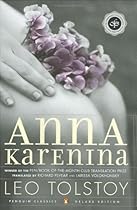 I finally finished Anna Karenina! It took much, much longer than usual for me to read, but I loved it! I already wrote a post on the first half if you'd like to check it out.
 I think one thing that really struck me in reading the book at this is time is how everyone in it feels trapped. I felt trapped in my own life recently, made a job change, and started my own businsess on the side. You can check out my business and blog on content marketing over at www.sparksmarks.com. I've also jumped on Twitter, so feel free to follow me on Twitter @sparksmarks.
One thing that stayed consistent from my first post is my love for Levin. Seriously, he's now one my most favorite characters ever. I'm a little bit in love with him actually. As he reminds me of my husband I suppose this is good! I love how he works in the fields alongside his workers and respects them and doesn't have the typical aristocratic attitude.
I mentioned last time how he and Anna are foils of each other, which intensified in the second half. Both long for happiness and are searching to find it and think they find it at one point but then realize the were wrong, then both feel trapped but choose very different ways of handling that.
Some spoilers, although I think most people know about the "big" spoiler:
Anna feels trapped in her marriage and finds something she thinks will make her happy in Vronsky. You emphathize with her at this point because she didn't choose her first marriage and you can't help rooting for her to be happy, although the choice of abandoning her son is hard to understand. But leaving didn't make her happy, and having a second child made things worse. I think perhaps she had post-partum depression, understandable as she nearly died in childbirth and was most likely struggling with loving this child when she had abandoned her first. This led to her not bonding with the child. This continued and grew worse, and eventually she loses her mind. She becomes paranoid and feels there's no possibility of happiness for her except in death, leading to her suicide.
Levin, on the other hand, pursues his happiness in his land. He tries to find happiness with Kitty, but she rejects him and so he focuses entirely on his land and tries to believe he can be happy this way. Eventually he realizes he cannot be happy without Kitty and after learning of her change of heart they unite. But even then he still struggled - with fear, with uncertainty, with questions. He too considers suicide at one point, but instead chooses to believe in God and finds happiness that way.
I was surprised at how uplifting the book was in the end since I knew about Anna's suicide going in. I was surprised that it had hardly a ripple affect on the majority of the characters. I was surprised that so much of the book was about Levin. I was surprised that Anna Karenina is now on my top 10 list of favorite books.
Interesting quotes:
"It used to be that a freethinker was a man who had been brought up with notions of religion, law, morality, and had arrived at freethinking by himself, through his own toil and struggle. But now a new type of self=made freethinkers has appeared, who grow up and never even hear that there were laws of morality, religion, that there were authorities, but who grow up right into notions of the negation of everything - that, as wild men."
That rings true to today as well.
"And it occurred to her how incorrect the saying was about a curse being laid upon woman, that in pain she would bring forth children. 'Never mind giving birth, but being pregnant - that's the pain." This passage goes on to have a woman talking about how she was freed when her child died. She was free from the work, the worry, the bondage. Darya is horrified at this, but then thinks about the horrors of pregnancy, childbirth, nursing, sleepless nights, pain, cracked nipples, illnesses. I was surprised to see this addressed this long ago.
Thursday, July 8, 2010
Anna Karenina - Part 1

Welcome to today's stop on the Classics Circuit Imperial Russian Literature tour, where I'll be reviewingAnna Karenina. Make sure to check out all of the other stops on the tour as well. I want to apologize for getting this post up late today instead of this morning. I'm trying to adjust to my new job and I haven't quite adjusted my schedule right yet. I also want to apologize for this being part 1 of a review instead of a whole review. I am only halfway through with Anna Karenina. I totally overestimated what I could get done in my time between jobs and trying to deal with all the things associated with a job change. I really just should have started it earlier though. But, it's such a big, dense book that doing two posts is probably a good idea anyway.
Despite my slowness in reading it, I'm loving Anna Karenina. And it's actually not as difficult a read as I expected. It's an interesting story with great characters. It really is a dense book though - lots of stuff going on, pages overflowing with characters, an abundance of details. And it's all meaningful. It's not a book you can read while mentally checking out. You really have to concentrate, which is something I've been lacking lately!
So, why is it worth the read? What they say is true - the Russians truly are the masters of the novel. In Anna Karenina, there are so many characters with overlapping stories that serve as a foil or foreshadowing of other characters and relationships. What surprised me so far is that despite the title and what I've heard back the book, Levin is the character I focus on the most and who seems the most alive. I'm a little bit in love with him actually. He's got his faults and certainly isn't some sort of Prince Charming/Mr. Perfect, but he's intelligent, rational, intense, insightful, and wise. I look forward to getting back to him each time the narration goes elsewhere. I'm rooting for him to live happily ever after. Hopefully his ending is a foil to Anna's!
I've also been surprised at how much I empathize with Anna. Going in, I knew she would cheat on her husband, and I expected to dislike her. I also expected that to happen much later in the book, but it happens right up front. Which makes it more interesting that I'm able to empathize with her. Tolstoy somehow makes you grasp the essence of his characters right from the start. With Anna, you instantly know she's not a bad person. You know her home life isn't happy, that she didn't chose to marry Karenin. That she deserves happiness and isn't going to get it. There is so much foreshadowing through the novel, which is another reason why the book is so dense. Every word could have an impact on later events, every action leads to reactions that resonate through the rest of the novel.
It's hard to describe the way Tolstoy crafts his novels. I feel like when I try to explain why I like them I can't come close to conveying what I mean. Clearly I'm not the wordsmith Tolstoy is. I know his books are intimidating, but I really do recommend giving them a try. Check out the Classics Circuit for other Imperial Russian writers and check back here for part two, hopefully soon!
Friday, July 2, 2010
Lady Susan, The Watsons, and Sanditon
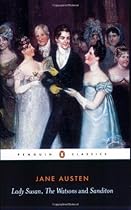 It's both quite sad and satisfying that I've now read all of Jane Austen's fiction. I've out on reading Lady Susan, The Watsons, and Sanditon for years. The last time I read a new-to-me Austen novel was seven years ago, during my junior year of college when I read Persuasion. I had actually been holding out on reading that one because I thought that would finish her off, but was assigned it in one of my English classes. So I was quite happy to learn about these other three works.
 Lady Susan is a complete short novel Austen wrote early in life. The Watsons and Sanditon are two fragments of unfinished novels. Together, they represent three phases of her writing styles.
Lady Susan is an epistolary novel, a novel written in letters. That form was quite popular in the eighteenth century, especially with writers such as Fanny Burney and Samuel Richardson, both of whose works Austen enjoyed. Austen's first drafts of Pride and Prejudice and Sense and Sensibility were also written in this format, but she revised them later on. Which was definitely a good thing. Although Lady Susan is quite enjoyable, it's not up to Austen's normal abilities. Which is completely understandable since it's an early work, and also because the epistolary novel doesn't stand the test of time as well. Although I personally really enjoyed Evelina by Fanny Burney and Pamela by Richardson, they clearly pale in comparison with Austen's other works. They are highly melodramatic and you have to suspend you disbelief at some of the stretches the author's take to make the form work. I remember writing a paper in the same college class where I read Persuasion about Evelina and Pamela and the epistolary novel's by nature unreliable narrators. You have to think, would a young girl really write that much about a guy she likes to her guardian, a reverend? Is Pamela proclaiming her innocence just because she's writing to parents? But in Lady Susan, Austen keeps the melodrama to a minimum and has the characters write more logically, but this ruins some of the fun of that medium. You also don't get as well-rounded characters, and since Austen has such wonderfully developed characters in her other works you feel like something's missing.
I'm not saying all of that to say I didn't enjoy Lady Susan. I did. Lady Susan is a great villainess, and again is a surprising turn for Austen, but in a good way. She's selfish, mistreats her daughter, flirts constantly, pursues married men, and just generally causes chaos. It's quite fun to read about her and the other characters responses to her. But the story is only about 100 pages, so there's not a lot to dig in to.
In The Watsons, you get more of your typical Austen fare. It's very similar in style and tone to her other novels. I couldn't read about Emma Watson without picturing Emma Watson, otherwise known as Hermione Granger from the Harry Potter movies, playing her. Emma was raised away from her family in the hopes of being an heiress, but that doesn't work out and she comes back home to her family, where some of her sisters are battling to get married so as not to become poor spinsters. Emma attends a ball and we're introduced to several young men who may vie for her hand. For just being a fragment, I really enjoyed this piece and wish it had been developed into a finished piece. In the introduction to my edition, they discuss reasons for this and don't land clearly on anything, but do comment on the fact that the similarities to both Emma and Pride and Prejudice may have caused her to stop writing it. Also, it's the only work dating from her time in Bath, and maybe she just didn't have the motivation to finish while there (she seems to have hated Bath and may not have had the creative power to concentrate there), and then she just didn't want to pick it back up years later after going to Chawton. One of the other interesting bits in the intro was a comparison of this fragment to Cranford. Having just finished Cranford, I thought that was interesting and can see that aspect of a small tight-knit community in both and that the overall tone is fairly similar.
Finally, we have Sanditon. Sanditon is the last piece she was working on before she died. Here you can see the progression from her early novels to the later novels such as Persuasion to something else. There's something darker in this fragment than her other novels, much like Persuasion has a different feel to it. But here there's a feeling that everything may not turn out alright. Mr. Parker is trying to turn Sanditon into the place to be, like Bath. There's a feeling that this might not work out so well hanging over the work. There's also a trio of hypochondriacs in the novel, who Charlotte, the main character, can't stand. Austen's own mother was a apparently a bit of a hypochondriac, and since Austen was most likely dealing her while trying to deal with her own very real illness, she chose to get her feelings out on paper.
Another interesting part of Sanditon is the introduction of a sickly, wealthy mulatto girl, Miss Lambe. I was quite surprised by her appearance, and that she is the richest of a group of students who come to visit Sanditon. I think that's a clue that something quite different was going to happen in this novel had Austen been able to finish it. The introduction says that Miss Lambe could have stepped right out of a Charlotte Bronte novel. So, it's interesting to read Austen's progression from mimicking the eighteenth-century styles, to developing her own, to then trying to build on that and keep pushing her limits and try for something that become more popular later in the century, long after her death. One can only imagine what works she could have pleased us with if she hadn't passed away so young.
If you haven't read these works because they aren't polished and two of them aren't even complete, I recommend that if you like Austen to go ahead and give them a try. It's worth it just for a little bit more Austen and to see her growth as an author through the three pieces.
Thursday, July 1, 2010
Speak
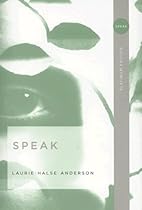 I had heard about Speak by Laurie Halse Anderson when it came out, but being an older young adult at the time, thought I was way to mature for it. :)
 What's interesting is that I probably liked the book more now then I would have then. I think my 17-year-old self wouldn't have been very understanding of why Melinda stays quiet. I can't imagine not telling everything to the cops, my parents, everyone. I would have yelled at her for not standing up for herself. And I think that would have clouded my view of the book. I still feel that way now, but I'm much more understanding than I used to be. I also realize now how young 13 is and how someone of that age wouldn't stand up for themselves, especially if they aren't taught to do so. When you're younger, you tend to assume everyone grew up the same as you did, even though you know that's not true. My family so stressed standing up for yourself that I never thought to do otherwise. Whether it was standing up to second grade teacher about the assignments she gave me (which were the same ones I'd done in first grade) or today standing up to my now former boss and telling her she can't treat people the way she does, I've never had a problem speaking up. When I served on a jury a few years ago in a sexual assault case, I didn't have any problems sending the guy to jail with the maximum sentence. And I was the one to convince the on the fence jurors to do so too. Obviously those examples aren't the same as what happens in the book, and I don't mean to minimize what happens to her. And I've learned that many people aren't taught to stand up for themselves. They're taught only to obey authority, to stay quiet and out of trouble. And since Melinda's parents seem to be the type of people who would rather ignore a problem than solve it, it's no wonder she stays quiet.
I also think I would have been annoyed with Anderson's writing style as a teen. I was not a fan of modernism/post-modernism even back then, and just wrote off anyone who wrote that way at all. Although I'm still not a big fan, I appreciate those styles more now and something like Speak is just fine with me now, and I get that it works well for the story. I think the style probably speaks better to her target audience, I was just weird about things like that.
Overall, I did enjoy Speak, and it's a very quick read.
Wednesday, June 30, 2010
Cranford Part Two
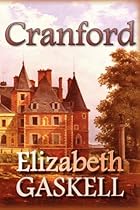
It's time for part two of the Cranford read-a-hosted by Allie at A Literary Odyssey. I loved this book! I think this is a great book to start with if you're not sure if you like reading classics in general or the Victorians specifically. It really was easy to read and entertaining.
I found it interesting to blog about this in two posts. In doing so, I realized the first half of the book was mostly funny, with lots of events to make you like the characters and laugh out loud. The second half focused on Miss Matty losing most of her money from a bad investment in a bank that goes under. It focuses on how the people of Cranford band together to help Miss Matty, even though many of them don't have much either. It was very sweet and touching. I also thought the solutions to her money problems were interesting, since most Victorian books that handle that issue focus on the young woman, and how she must marry or become a governess. That's about it. I like how she becomes a little entrepreneur for a while, even though it's not very genteel.
Overall, I felt that Cranford was really about community. All of these different people come together. I wonder if Gaskell was worried about losing that feeling of community as people began flocking to cities during the Industrial Revolution. It also made me thankful for the community my Grandma has in her neighborhood, which I compared to Cranford in my first post. They all keep an eye on each other and help each other out, and I know if something happened to her they would take care of her until my family got there. It's interesting though that at the same time, I have zero desire to get to know my neighbors and if it wasn't for the expense and yard work, I'd prefer to live where I don't have neighbors too close. I still enjoy reading about tight-knit communities though, and I am grateful to live in a city where I know we band together when it counts, such as after the Murrah Building bombing and the May 3, 1999 tornado. Just as the women in Cranford are happy to live there, I'm happy to be an Okie!
Gulliver's Travels Part Four
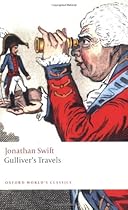 We're at the end of our Gulliver's Travels read-a-long hosted by Allie at A Literary Odyssey. If you missed out of the rest of the discussion, you can read about part one, part two, and part three before checking out part four below.
 In part four, Gulliver travels to the land of the Houyhnhnms, who rational, talking horses. There is a mutiny on Gulliver's boat and the men decide to become pirates, but first they must get rid of Gulliver. When he first arrives on land, he meets the Yahoos, who are barbaric humans. He recognizes that they are human-like, but doesn't see himself as of the same species as them. When he meets the Houyhnhms, he imagines that the people who domesticated and trained these creatures must be infinitely rational and wise and can't wait to meet them. He soon discovers that there are no such humans, and the Houyhnhnms are the rulers here.
Here again Gulliver trades stories with the creatures he meets, telling them about England and they sharing their culture with him. The Houyhnhnms can't believe he's actually a rational creature capable of learning, much in the way that we would be shocked to discover a talking, rational horse. The Houynhnms are purely rational - no emotions rule their lands. They have no wars, no real problems except for the a occasional Yahoo, and they live to think. At first, this land seems wonderful, I always start wanting to live in such a place, a place without drama and stress. But as Gulliver continues living there, we discover there's also no love and true joy either. Gulliver doesn't see that and continues wanting to be a Houyhnhnm, but as a reader, we see that Swift isn't advocating for a strictly rational society. Would we really want to live in a world with arranged marriages made solely for the purpose of breeding the best children? To have strictly two children, and if another couple loses one of there kids and aren't able to conceive, to give your child to them and then have another for yourself? To have no real emotional attachment to anyone? Sometimes, such as after losing a loved one, we may be tempted to think that life would be better that way, but do I really wish I had never loved so that I might never feel pain?
Although most readers probably come to see that they wouldn't really want that kind of life, Gulliver does, and goes a little crazy upon finally returning home. He converses with his horses for at least four hours a day and can't stand to be too close to other humans, even his family. Clearly Swift isn't promoting that! Again, I think he's promoting moderation. Society needs a lot more rational thought, but at the same time you can't swing to far and remove common human decency and love from the equation. A purely rational focus can lead to things such as believing it's okay to kill people who are physically or mentally handicapped or simply people who aren't contributing enough to society.
Lest you think that part four is entirely heavy, there were a few quite funny bits. Swift really rails against lawyers and doctors in this section. About lawyers, he says their job is to argue that white is black and black is white. He provides an example of a neighbor who tries to lay claim to one of his cows. Gulliver says he can't argue that the cow is rightfully is and that the neighbor has no claim because the lawyers and judges would never go for that, so he must either pay the neighbor's lawyer to lose the case or argue that the cow actually belongs to the neighbor and that Gulliver wants to take it from him! He also says that once they've twisted something once, it's a precedent and is therefore easy to do in the future.
One last thing I found interesting about the Houyhnhnms is that they educate their males and females the same, and could not understand why we would not do so. "And my Master thought it monstrous in us to give the Females a difference Kind of Education from the Males, except in some Articles of D
Domestic Management; whereby, as he truly observed, one Half of our Natives were good for nothing but bringing Children into the World: And to trust the Care of their Children to such useless Animals, he said was yet a greater Instance of Brutality." Well said.
I hope you enjoyed reading along. I may have to start doing multiple posts for larger books. It made it easier to delve into everything I wanted to discuss instead of leaving half of the things out so as to not have never-ending posts. Of course, that would require more time, so that may not happen. We'll see!
P.S. If you subscribe to this blog in a RSS feed, I'm sorry if you got a nearly blank post earlier today. I was creating a few templates for upcoming posts and accidentally hit "publish post" instead of "save now." Look for the actual post on the Lives of the Signers of the Declaration of Independence soon! Thank you!
Sunday, June 27, 2010
Ethan Frome
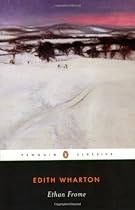 I've owned Ethan Frome by Edith Wharton since college but hadn't read it, despite loving The Age of Innocence and The House of Mirth. When I read Summer recently for the Classics Circuit, I remembered Ethan Frome and figured it was about time to read it. It's really short and I read it in one day, so I'm not sure why I waited so long to give it a try.
 However, it's definitely not up to Wharton's usual par in my opinion. I noticed several people seemed to share that opinion during the Circuit. A lot of them attributed that to the book not being set in NYC like most of Wharton's books. Since I enjoyed Summer, which was also not set in NYC, I thought perhaps I would enjoy Ethan Frome as well. But, it just didn't have anything that grabbed me. I'm usually much more attached to Wharton's characters than I was here. I finished this a week ago, and now I can't remember anyone's name except Ethan's. I still remember Lily Bart and Newland Archer even though it's been years since I've read The House of Mirth and The Age of Innocence, whereas I doubt I'd remember Ethan's name if it wasn't the title!
Also, the book was depressing. Now, I think all of her other books are fairly depressing too, so that's not a deterrent, but since I didn't care about the characters, it was just depressing and boring instead of depressing and moving. I didn't hate or anything, I don't want to make you think that, it just wasn't Wharton's usual quality.
Thursday, June 24, 2010
Gulliver's Travels Part Three
Okay, I'm just a day late this time for part three of the Gulliver's Travels read-a-long hosted by Allie at A Literary Odyssey. I'm slowly catching up, but I've been bombarded with e-mails from former co-workers and friends about my job change and have had lots of fun things to do like take a drug test and preparing for the new job. But it was quite nice to take a break a rejoin Gulliver on his travels. A lot of critics talk about about how part three doesn't fit with the rest of the book and is sort of seen as a problem section. It is different from the others, but I love this part. All of the other three sections focus on a specific group of people. In part three, Gulliver travels to several different places and meets a variety of different people groups. I remember being enthralled with this section the first time I read because I had no idea what would happen next. I also feel like some of the things in this chapter are really creative. Flying islands, people trying to turn excrement into food (again with the crudeness!), immortals, visits to the dead, there's a little something for everyone.
Everything about the island of Laputa vividly stuck in my mind from the first time I read it. I think that's partly because I could identify with the people there while at the same time identifying with Swift's satire of them. The people there are highly intelligent and focused. They prefer to spend their time in thought, to the point that they forget about more practical matters. They have to have flappers to hit their ears when they need to listen and their mouths when they need to speak. They get so focused on their thoughts that they forget to interact with people. As someone who sometimes does that, I thought that section was hilarious because it was so familiar! But at the same time, I realize that's really sad, and quickly grew frustrated with them as they can't focus on anything practical. I hate it when people can't bring things back to practical matters at some point, and they were actually rather irrational. Their houses were falling apart and they couldn't grow food. I think Swift is partly saying here that everything needs to be done in moderation. Anything pursued to the point of everything else falling apart can't be good.
Also, the image of the flying island being able to crash down on the lands below to end any rebellions the people were plotting was quite striking. As I mentioned in the discussion on part one, this signified Swift's views on how England treated Ireland at the time.
I also like reading about the crazy experiments the Royal Academy was doing in Lagado. I thought all of the experiments were funny, like the one I mentioned earlier about attempting to turn excrement back into food, trying to turn ice into gunpowder, and building houses from the roof down. The absurdity of it all was amusing. But then I read that the Royal Society in Britain was doing similar types of research! Swift was mocking this reliance on experiments that clearly don't make any sense.
Finally, I enjoyed reading about the Struldbrugs and Gulliver's reaction to them. I've never wanted to have immortal life, and have never understood the desire in others. It was interesting to watch Gulliver go from excitement at the thought of meeting such educated and wise people to seeing the tragedy that is their lives. By the end, he actually wants to take a few back to England to use a reason for why we should not fear death.
I'll leave it at that and hope that some of these stories have inspired you to give Gulliver's Travels a try if you haven't read it before.
Tuesday, June 22, 2010
Gulliver's Travels Part Two
Well, it's almost time for part 3 of theGulliver's Travels read-a-long hosted by Allie at A Literary Odyssey and I'm just now writing about part one. I've had a crazy time personally, with both my husband and I looking for and accepting new jobs. I just turned in my resignation today and ugh, is that not a fun thing to do. I'm very excited about my new job though. However, all of the job searching, applying, interviewing, portfolio preparing, and stress has put a big dent into both my reading and blogging time. I hope to be a little more consistent soon, although settling into a new job will probably eat into some of that time too, especially since I will now have a longer commute. I'll be working downtown though, so I'm actually excited about that transition.Anyway, on to Gulliver's Travels. Part two has Gulliver travelling to Brobdingnang, the land of the giants. It's a foil to the first part, so Gulliver goes from feeling like a giant to feeling like a Honey I Shrunk the Kids tiny person. It's interesting because he never changes, but others' perspective of him changes, which leads to a change in his own perspective.
The scene that always sticks with me from this section is rather crude. Gulliver is describing on of the giant women. He describes seeing a woman breast feeding with her six foot breast. Seeing the breast was so disgusting to him because he could see all of the imperfections and it just looked monstrous. I think it sticks with you because it's such a vivid image, and it's unexpected. Gulliver then goes on to say that it makes him think about his normal English ladies, and how they appeal beautiful because they are proportionate to him and therefore he can't spot all the tiny flaws in their skin for example, whereas the giants skin looks completely uneven, spotted with holes, and they smell gross. He then reflects on the fact that he found the Lillputians to be infinitely beautiful, probably because they were so small compared to him he couldn't see any flaws clearly. It's all about perspective. That also applies to how people treat him, with the Lilliputians viewing him as a weapon and the Brobdingnagians thinking he's a circus sideshow.
My favorite part of this section, however, is more political. Gulliver describes the politics and history of England, proud and boastful of his magnificent empire. The king of Brobdingnag thinks is laughable, at first because of his size and then because of his descriptions. After describing everything, Gulliver expects the king to be impressed, but instead he has several great quotes, including this one: "You have clearly proved that Ignorance, Idleness, and Vice are the proper Ingredients for qualifying a Legislator. That Laws are best explained, interpreted, and applied by those whose Interest and Abilities lie in perverting, confounding, and eluding them."
Um, how perfectly does that describe modern day America? America was still a colony at the time Swift wrote, and yet he nails it right on the head. Those are statements that are unfortunately true throughout history, through (probably) every country. Even those this is a negative example, this is one of the things I love most about reading. It's seeing how similar we are all, regardless of time and place. I also love reading about our differences, but the examples of sameness reminds me that we're all people. The Irish and English, the Protestants and the Catholics, the Lilliputians and the Brobdingnagians, they're all people.
Tuesday, June 15, 2010
Cranford Part One
It's time for part one of the Cranford read-a-hosted by Allie at A Literary Odyssey. I've heard lots of things about Cranford and Elizabeth Gaskell's other works, but have never actually read anything by her. Ryan took one look at the cover of my copy and said, "What is that? Why are you reading something so boring?" I said, "It's Judi Dench! DAME Judi Dench! It's clearly going to be awesome." But I have to admit, I was a little nervous. A book about bunch of old ladies in a little bitty town gossiping? I'm wasn't sure how exciting this book would be.
The good news is that I love it! It's hilarious. The narrator cracks me up, as do all the ladies. They're quite entertaining. And Gaskell's writing style feels modern, more like you're reading a historical fiction novel than an actual novel from history if you know what I mean. The one time she used a term I wasn't familiar with, she defined it! It certainly wasn't what I was expecting from a Victorian novel, especially since she worked for Dickens and praises him in the opening chapter. That's actually a pretty funny scene, with two characters duking it out over Dickens vs. Samuel Johnson.
The book also starts out with an image of a cow dressed in grey flannel. It was trapped and removed most of it's hair and couldn't keep warm, so they dressed it in grey flannel. I keep picturing that and cracking up. My parents went a little crazy a few years ago and bought some land and some animals and have a few cows, so I keep thinking about driving up to their house and seeing a cow just standing there eating grass, wearing her flannel. And trying to imagine getting the cow to get into the flannel? Pretty funny.
I also liked it when the book talked about the ladies' views on eating oranges. They love them, but don't feel like they should eat them in front of others because the best way to eat them is basically just to suck on them, which is horribly messy and unladylike. I do the same thing! And I hate eating them for that reason. It was interesting to think about people thinking the same thing back in the 1840s.
Finally, I'm getting an extra kick out of this book because my Grandma totally lives in Cranford. She may live in a suburban neighborhood and not a tiny English village, but it's totally like Cranford. There's a bunch of older ladies (and a few men) who sit around and gossip and are all up in each other's business and know everything about what's going on. My Grandma had to get a new roof recently, and all the neighbors kept coming and spying on the workers and letting them know they were watching, like some sort of septuagenarian mafia. And my Grandma's a little bit particular, just like Miss Jenkyns, although not nearly so uptight! So, the book makes me think of her and that makes it a little bit more fun. If you're participating in the read-a-long, I hope you're enjoying it as much as I am!
Wednesday, June 9, 2010
Gulliver's Travels Part 1
I'm very excited about part one of the Gulliver's Travels read-a-long hosted by Allie at A Literary Odyssey. Gulliver's Travels is one of my all-time favorite books. I first read it in college, then again while working on my Master's. At that time, I actually decided to focus on it and some of Swift's political writings for my thesis and did a done of research, but then decided to just do the test option instead of a thesis since I'd already written an undergrad thesis. I haven't read it since then, so I thought it would be nice to reread it while not in research mode. If you haven't read it before, part 1 is the part you're probably familiar with anyway. It features Gulliver in the land of the Lilliputians, the little people who think he's a giant. What surprised me so much the first time I read this is that it's not a kid's book at all, so it's weird to me that the story somehow has been turned in that. If that's your perception of Gulliver's Travels, you need to read the actual book. It's a satire about politics and while their are many references to early eighteenth century politics and relations between Ireland and England, many of the overall comments are relevant today.
As Gulliver watches these tiny people fight over things such as the proper way to break an egg or the height of their shoe, he laughs at them and their wars and power struggles and basks in his own superiority. But Swift wants us to think about how we're like the little people. I'm sure God sometimes can't believe the stupid things we humans fight about and laughs at our power struggles when He is clearly so much more powerful than we could ever hope to be.
He also notes that essentially the Lilliputians and Blefuscans are the same, and it's silly that they're fighting each other and trying to take over the other. The same thing was happening with Ireland and England at the time. Swift was born to English parents but was raised in Ireland, so he was right in the middle of the fighting and was a case in point that the English had no right to try to take over the Irish or feel superior to them in anyway. Then of course even within Ireland you had religious fighting between the Catholics and the Protestants, causing yet more problems.
And yet Swift didn't just sit by and suggest everyone sing kumbaya. He wrote highly satirical and offensive pamphlets, letters, and essays to stir up the Irish to throw off the shackles of the English and for the English to realize they should leave the Irish alone. He wanted to get people to the point where they could all leave each other alone. I think this is something a lot of pacifists miss. They tend to think that if they stop fighting, others will stop too. And while that may work in some instances, in many, it doesn't. Trying to get terrorists to stop fighting by leaving them alone doesn't work. Both parties have to be willing to stop before this works. I think that's what Swift was trying to do with this section. I think he demonstrated this when he had Gulliver lift all of the enemy ships of Blefuscu out of the water, showing them they didn't have the power to overtake Lilliput. Then when the emperor of Lilliput wanted to take that opportunity to turn Blefuscu into basically a province of Lilliput, Gulliver convinces him otherwise and helps orchestrate a peace agreement between the two.
I'm probably making this sound rather boring, aren't I? Well, Gulliver's Travels is quite funny. Even when you miss some of the references to things of the time period, there are plenty of things you will get. And Gulliver pees on her Imperial Majesty's palace to put out a fire. That's pretty funny. And gross and crude. Apparently dirty and body fluid related humor just never go out of style. There's also the part made famous in the kid's version, with the tiny people tying the giant Gulliver down, which is pretty funny. And parts 2, 3, and 4 all see Gulliver traveling to new and exciting places, so make sure to follow along for the rest of the read-a-long or check out the book for yourself. For more thoughts on part 1, remember to go to A Literary Odyssey.
Monday, May 31, 2010
Father Brown

Welcome to the Golden Age of Detective Fiction blog tour hosted by the Classics Circuit. For today's stop, I'm reviewing
Father Brown by G.K. Chesterton. Before I start my review, I want to say that Chesterton's The Man Who Was Thursday is my husband's favorite book, and it's definitely up there on my list too. It's a great mind-tripping well-written mystery. I just want to preface my review with that so I don't steer you away from Chesterton entirely. You should read The Man Who Was Thursday; it's just around 150 pages and it's great.
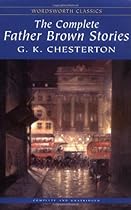 But Father Brown is not. Too be far, I do see how other people could enjoy this collection of short stories. I know my husband does. But when I read a mystery, I want suspense. I want clues so that I can at least try to find the solution. And I want fun. I didn't get any of that out of Father Brown.
 Father Brown is very literary. Even thought it's all short stories, half of each story has nothing to do with the mystery and is just more about life in general. I felt like the stories focused more on philosophy and things like how you never know when you're sitting right next to a murderer. The stories are all clever, but I just didn't find them interesting.
I had exactly the same feeling when I read Sherlock Holmes though. I only made it through two Holmes stories before deciding not to force myself to suffer through anymore, so I'm clearly not an expert, but the stories seem fairly similar on some level, and I think that if you enjoy the Holmes stories you would enjoy Father Brown. So I don't want to discourage everyone from reading them, I just want to explain why I didn't really care for them. I want my mysteries to keep me on the edge of my seat. Sherlock Holmes and Father Brown don't do that for me. They may actually be a lot more intelligent and literary reads than the mysteries I prefer, but when I read a mystery it's because I'm in the mood for an escape and I don't want something overly literary. (Now, I didn't really find Sir Conan Doyle's writing to be that great, but he's considered literary and his stories do have a more intelligent focus.) Maybe if I was better prepared going in and not expecting something lighter I would have enjoyed this more. I do want to point out that the characters of Sherlock Holmes and Father Brown are quite different though. Holmes is so egotistical, moody, and he overpowers the stories, while Father Brown hovers in the background, quiet, calm, supremely rational.
I did really enjoy this quote though: "It's part of something I've noticed more and more in the modern world...People readily swallow the untested claims of this, that, or the other...It's the first effect of not believing in God that you lose your common sense and can't see things as they are." That theme came up quite a lot, that people often accept what others say without thinking about it, yet the question what is right in front of them. If you don't believe in God, you still search for something to feel that void and don't have the moral compass to prevent you from doing things like killing people or stealing or other things for your own benefit. Clearly not everyone who doesn't believe in God does those things, but it's a lot easier to do those things if you don't think there's some sort of eternal punishment awaiting you for doing them. Father Brown also talks a lot about being both a man of faith and a man of science, like Chesterton himself was. He believed that the two worked together, and that common sense makes you belief in God and that if you abandon him you abandon common sense. Although he's not very popular anymore, Wikipedia lists numerous authors who cited him as an influence on them, including C.S. Lewis and Neil Gaiman. Wikipedia also had this quote I found quite entertaining: "The whole modern world has divided itself into Conservatives and Progressives. The business of Progressives is to go on making mistakes. The business of the Conservatives is to prevent the mistakes from being corrected." So, while I didn't enjoy Father Brown as much as I had hoped, I'm still fond of Chesterton in general and hope you give The Man Who Was Thursday a try!
Monday, April 26, 2010
The Three Musketeers
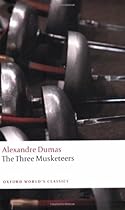
It's time to welcome The Classics Circuit back to my blog! This time we have Alexandre Dumas joining us. The first thing I have to say about The Three Musketeers is that it was actually a really easy read. The language wasn't difficult and there's a lot of action. But although I definitely enjoyed it and didn't get bored, I found myself reading really, really slowly. I'm not sure why that was. I think part of it might be that there was so much going on, and so many characters, that I read very carefully and that slowed me down. Not that I don't normally read carefully, but there's usually not that much to keep track off, and I had to keep making sure I kept Athos, Porthos, and Aramis straight. I adored D'Artagnon though (Although it kept making me think of this guy I went to high school with who was named after him - D'Artagnon Everett Dean Burns. It goes from French to hick real fast when you say that with a southern accent!)
I really enjoyed the adventures though, and I was surprised at some of the killings and stabbings that the musketeers and D'Artagnon jumped at every chance to start. There was also a reference to lesbians that surprised me!
I loved Don Quixote, and I was kind of hoping that The Three Musketeers would be somewhat similar, although with a stronger hero of course. So I thought it was awesome that Dumas refers to Don Quixote on the first page! I think that set me up to really enjoy the book, and take it for the fun, frothy, adventurous story that it is. I think that more English teachers should use this book, although it is really long. But I think it would interest more boys in reading since it's so clearly a boy book, while still be entertaining to the girls. It's also an accessible classic, although a post Jenny made over at Shelf Love made me wonder about that.
Jenny wrote a post about translations, and whether translators should modernize the language or stick closely to the original and what liberties they can take with the overall style. I've thought about translations before when reading Greek or Russian literature, but her post made me realize I've never once thought about that with French works! I think I just assumed that they wrote in English! I have no idea why I had never thought of that before, especially because I love Voltaire and I just read Zola and was reading Dumas. So I picked up my Oxford World's Classics edition of The Three Musketeers, and noticed that the translator is barely acknowledged. With the Greeks, it's usually plastered all over the place, probably because the translator also wrote the intro. But here it was buried in the last part of the introduction. William Barrow translated it in 1846, so I'm impressed the language was still very easy to read, although I do read a lot of Dickens who wrote at the same time so maybe I'm biased on that. According to Wikipedia, Barrow is pretty faithful to the original, except he toned down the sexuality to conform with Victorian standards. I'm surprised that lesbian reference still worked it's way in! But apparently the D'Artagnon and Milady scenes were a bit steamier in the original French. Although the Barrows translation was the standard for years, now a version by Richard Pevear in 2006 is considered standard, and he believes that the Barrows edition is an example of bad translation screwing up the author's work. So, if you'd like the steamier, more recent edition, check out the Pevear one. Maybe someday I'll read it to and see which was better. Anyway, thank you to Jenny for making me think more about translations!
Saturday, April 10, 2010
The Ladies' Paradise
Whether you're visiting my blog for the 24-hour readathon or from the Classics Circuit, or just because you like me, welcome!
The current tour on the Classics Circuit is for Emile Zola. I've owned The Ladies' Paradise for a while, and had started reading it about a year ago. I was only about 15 pages in when I realized it was part of a series, so I put it aside to get the earlier books in the series and read them first. Then I learned that some of the series is only available in French. Oops. So, when Zola came up on the Circuit, I decided to dust off The Ladies' Paradise and dive in.

Overall, The Ladies' Paradise doesn't feel like a novel. The main character is really the store, The Ladies' Paradise, and it's more about business, marketing, and consumerism than about the actual characters and plot. Normally that would drive me crazy, but it didn't here. It's definitely not going to make my list of favorite books, but I still enjoyed it. It surprised me that this was written in 1883. The business world descriptions were oddly accurate for today as well.
It's a revolutionary time for business. Stores have started placing pricing signs in the windows, increasing competition. Large stories like The Ladies' Paradise now have departments selling different items instead of each store only selling one type of item. Before then, there were umbrella stores, dress stores, silk stores, etc. Now, one giant store could sell all of these items, and grow to have over 3,000 salespeople and make a million francs in one day. (See my entry in the book score/soundtrack mini-challenge for the readathon for a comparison between this and Empire Records.)
The story is about Mouret, the owner of The Ladies' Paradise. He sees the opportunity to exploit women and market to them to make tons of money in his story. There is one girl, Denise, who becomes a salesperson in his shop that refuses to give into the consumerism and be bought by him, and he falls in love with her. And her transformation from a frail girl unable to stand up for herself to someone who can control the shots was interesting, but the story is less about Mouret and Denise than consumerism itself.
I don't know if it's just because I'm in marketing myself that I paid more attention to that aspect of the novel, or if it was just really prevalent anyway, but that's what I focused on. The focus on women is definitely there though: "Of supreme importance...was the exploitation of Woman...it was Woman they were continually snaring with their bargains...They had awoken new desires in her weak flesh." And on, and on. It doesn't paint a very flattering picture of women. It portrays them as easy to tempt by saying something is on sale, by filling the store with baubles and shiny things, by saying it's the latest fashion, by having sales reps there to greet and sell to each customer individually. The whole thing is extremely insulting, but at the same time it's rather true. Even when I worked in the men's department in J.C. Penney's in high school, it was the women who bought 90% of the stuff. And sometimes something like Dockers would be on sale for like $2 off, but the sale sign convinced them all they were getting a great bargain. And how many women do you know that have to buy the latest fashions just because it's the trend, and heaven forbid they aren't trendy?
I think I found this book fascinating because in high school I was someone who focused on fashion, and even though I didn't like being trendy exactly, I was still obsessed with clothes and shopping. Now you have to practically drag me to a mall, and if someone told me I was trendy I might just punch them in the face. I think focusing on being trendy just makes you look unintelligent (although going to far in the other direction can be just as bad). It looks like you don't know who you are and are just doing what you think you're supposed to be doing, demonstrating low self-esteem. What's interesting to me is that this seems to now be a plague among the boys in America and not just the girls. Last night I went to the mall with my husband for the first time in about 18 months. What is wrong with teenage boys these days? They look like idiots, and the look girly! They all have skinny pants and pink and purple tops, which I noticed is what was also on all the mannequins. And their hair, ugh. I don't mind long hair, my dad actually usually has long hair, but what's with the weird long in front, elf-like haircuts? I'm really glad I'm not a teenager these days. I would not be dating.
Sorry for the tangent. One more thing I thought was interesting. Mouret arranges his story so that you have to walk across the most floor space as possible to reach departments that you might shop together. For instance, ladies shoes and dresses may be a mile apart, with accessories in between to tempt you along the way. That way you aren't like to just walk in and make your purchase and leave. He also rearranges the store to keep people confused. I think Dillard's is on to that strategy. My mom and grandma always talk about how they have a different layout every time they go. Maybe that's why. Interesting. It also talked about marketing to the children, having tempting items for them that the parents can't say no too. We tend to talk about this being a recent issue, so I thought that was fascinating that Zola wrote about that over 100 years ago.
Well, I'm off to get back to reading for the readathon!
The current tour on the Classics Circuit is for Emile Zola. I've owned The Ladies' Paradise for a while, and had started reading it about a year ago. I was only about 15 pages in when I realized it was part of a series, so I put it aside to get the earlier books in the series and read them first. Then I learned that some of the series is only available in French. Oops. So, when Zola came up on the Circuit, I decided to dust off The Ladies' Paradise and dive in.

Overall, The Ladies' Paradise doesn't feel like a novel. The main character is really the store, The Ladies' Paradise, and it's more about business, marketing, and consumerism than about the actual characters and plot. Normally that would drive me crazy, but it didn't here. It's definitely not going to make my list of favorite books, but I still enjoyed it. It surprised me that this was written in 1883. The business world descriptions were oddly accurate for today as well.
It's a revolutionary time for business. Stores have started placing pricing signs in the windows, increasing competition. Large stories like The Ladies' Paradise now have departments selling different items instead of each store only selling one type of item. Before then, there were umbrella stores, dress stores, silk stores, etc. Now, one giant store could sell all of these items, and grow to have over 3,000 salespeople and make a million francs in one day. (See my entry in the book score/soundtrack mini-challenge for the readathon for a comparison between this and Empire Records.)
The story is about Mouret, the owner of The Ladies' Paradise. He sees the opportunity to exploit women and market to them to make tons of money in his story. There is one girl, Denise, who becomes a salesperson in his shop that refuses to give into the consumerism and be bought by him, and he falls in love with her. And her transformation from a frail girl unable to stand up for herself to someone who can control the shots was interesting, but the story is less about Mouret and Denise than consumerism itself.
I don't know if it's just because I'm in marketing myself that I paid more attention to that aspect of the novel, or if it was just really prevalent anyway, but that's what I focused on. The focus on women is definitely there though: "Of supreme importance...was the exploitation of Woman...it was Woman they were continually snaring with their bargains...They had awoken new desires in her weak flesh." And on, and on. It doesn't paint a very flattering picture of women. It portrays them as easy to tempt by saying something is on sale, by filling the store with baubles and shiny things, by saying it's the latest fashion, by having sales reps there to greet and sell to each customer individually. The whole thing is extremely insulting, but at the same time it's rather true. Even when I worked in the men's department in J.C. Penney's in high school, it was the women who bought 90% of the stuff. And sometimes something like Dockers would be on sale for like $2 off, but the sale sign convinced them all they were getting a great bargain. And how many women do you know that have to buy the latest fashions just because it's the trend, and heaven forbid they aren't trendy?
I think I found this book fascinating because in high school I was someone who focused on fashion, and even though I didn't like being trendy exactly, I was still obsessed with clothes and shopping. Now you have to practically drag me to a mall, and if someone told me I was trendy I might just punch them in the face. I think focusing on being trendy just makes you look unintelligent (although going to far in the other direction can be just as bad). It looks like you don't know who you are and are just doing what you think you're supposed to be doing, demonstrating low self-esteem. What's interesting to me is that this seems to now be a plague among the boys in America and not just the girls. Last night I went to the mall with my husband for the first time in about 18 months. What is wrong with teenage boys these days? They look like idiots, and the look girly! They all have skinny pants and pink and purple tops, which I noticed is what was also on all the mannequins. And their hair, ugh. I don't mind long hair, my dad actually usually has long hair, but what's with the weird long in front, elf-like haircuts? I'm really glad I'm not a teenager these days. I would not be dating.
Sorry for the tangent. One more thing I thought was interesting. Mouret arranges his story so that you have to walk across the most floor space as possible to reach departments that you might shop together. For instance, ladies shoes and dresses may be a mile apart, with accessories in between to tempt you along the way. That way you aren't like to just walk in and make your purchase and leave. He also rearranges the store to keep people confused. I think Dillard's is on to that strategy. My mom and grandma always talk about how they have a different layout every time they go. Maybe that's why. Interesting. It also talked about marketing to the children, having tempting items for them that the parents can't say no too. We tend to talk about this being a recent issue, so I thought that was fascinating that Zola wrote about that over 100 years ago.
Well, I'm off to get back to reading for the readathon!
Herland
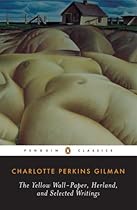
I finished book number two for the readathon - Herland by Charlotte Perkins Gilman. I had heard about this book in college when we read The Yellow Wallpaper in a class, but hadn't read it. A few months ago Rebecca at Rebecca Readshad a giveaway, and I won a copy. Thanks Rebecca!
Herland is about a land where only women live. They can reproduce asexually, and haven't had men in their society for 2,000 years. For the story, three men discover this land and assume that is must be awful because women can't run anything, that there must actually be men somewhere, and that they'll have a grand old time with that many women to conquer. She wrote the book in 1915, so that was still the belief of most of the world.
Of course, the women's world is portrayed as a utopian society where all is peaceful and wonderful. What surprised me was that their society so celebrated motherhood above all else, and that seemed to be their reason for living. I found it odd that Perkins Gilman visualized even this utopian society that way since she did not seem to enjoy motherhood herself. After she and her husband separated and he remarried, she willingly sent her daughter to them. So this worshipping of motherhood just seemed really odd.
I think that aspect is part of what prevented me from really enjoying the book. As someone who does not want to have children, I hate things that focus on how the point of everything is to have kids. I didn't expect to love this book since I personally don't think an all-woman society would be a pleasant thing. I have to agree with a bit of the men in the book's preconception of the society, that the women would fight all the time. Maybe if men weren't in the picture women wouldn't tend to be so jealous of each other and so mean, but I don't know. I mean, when I was dating this one guy in high school, I had several different girls threaten me if I didn't break up with him. Again, maybe that wouldn't happen without men around, but it just seems like there would still be something to fight about. And I prefer anti-utopian novels to utopian ones. They seem much more realistic. I guess I'm a pessimist.
I am glad I read this book though, I did think it was interesting and it does you make think, and it does make me appreciative of the fact that I can have a great career, could easily support myself if I wasn't married, and can choose not to have kids if I don't want to.
Sunday, April 4, 2010
Her Fearful Symmetry
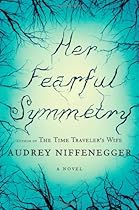
I chose an oddly appropriate book for Easter weekend - Her Fearful Symmetry by Audrey Niffenegger. It's got quite a bit to do with death and resurrection. I bought this when it first came out because I LOVE The Time Traveler's Wife, but it was not well reviewed and was so criticized that I was afraid of disappointment and put it off for a while. I think putting distance between the reviews and the actual reading paid off, and my still somewhat lowered expectations made me realize this probably wouldn't be as good as as The Time Traveler's Wife.
However, I actually really liked it! It's very weird, which might have something to do with the negative reviews, but really, The Time Traveler's Wife isn't exactly normal either. But, it doesn't focus on a cemetery and death and ghosts like Her Fearful Symmetry does. I don't usually enjoy ghost stories, but this was very well done. I think overall it was extremely well written, with a whole cast of interesting characters who I came to care about, a mystery I wanted to unravel, and a plot I wanted to unwrap like a candy bar - slowly at first, savoring the anticipation, then quickly ripping through the package to get to the end.
Her Fearful Symmetry is a love story, a truly unique love story, and actually several love stories packaged together. Elspeth and Robert. Edie and Jack. Valentina and Julia. Martin and Marijke. All of the characters have their good and bad sides, and they're all intriguing. Martin has an extreme case of OCD and won't even leave his flat. Valentina and Julia are twins who can't quite seem to separate and still dress alike at 20. Elspeth is dead. (That's not a spoiler; it's on the book flap and happens in the first few pages.) Elspeth leaves her flat to Julia and Valentina, and Martin and Robert also have flats in the same building, so all of the characters are intertwined. The condition of the girls inheriting the flat and money is they must live in the flat for a year and their parents, Jack and Edie, cannot enter the flat. Why? Well, you'll just have to read it to find out.
Saturday, April 3, 2010
House Rules

 I know some people think Jodi Picoult's books a bit formulaic, but I love them! They always rekindle my love of reading and I tend to go on a reading tear after reading one of her books. There have been a few disappoints, including Change of Heart, so I was very glad that I enjoyed her latest, House Rules
 .
. House Rules is about a family where the older son as Asperger's, a high-functioning form of autism. I have been anticipating this book since I heard she was writing about that topic a while ago. I'm intrigued by autism and since her books are also so carefully researched I knew I would learn more about it through her book. I think my interest in the topic goes back to elementary school when I read Kristy and the Secret of Susan, one of the Baby-Sitters Club books. I think it was the first time I'd really read about someone with a disability, and we had a special elementary school in my district for kids with disabilities, so I had never met someone with one at that point in my life. I found Susan's abilities amazing and wondered how the brain could work that way, and the trade off her being stuck in her own mind.
Jacob, who has Asperger's is able to interact in ways that Susan couldn't, so that he can seem almost "normal" some of the time. This mix of not being clearly autistic but not functioning like a typical person is the crux of the book. A woman is dead, and Jacob is suspecting of her murder. His Asperger's causes him to act guilty, but is he? And if he is, is he reponsible for his actions? I enjoyed the mystery aspect of trying to discover if he did it or not, and even though I guessed early on what happened, since Picoult is known to through in twists I couldn't be sure if I was right until the end. Every time I put the book down, I couldn't wait to get back to it and find out what happened.
I don't think it has been very well reviewed, but I really liked it and would recommend it, and especially thought it was stronger than Change of Heart, which is probably one of my least favorites of her books. I also liked that is wasn't depressingly sad like some of her other books. I do think the reviewers are right in that she focused more on research of the legal and medical aspects of the stories, but I actually felt that worked well since Jacob is the focus and he focuses on those things, not the emotional elements. And she still did a good job of creating different perspectives and having the voices sound different, especially Jacob's. So overall, I think it was a great book!
Friday, March 19, 2010
The Prime of Miss Jean Brodie
I am having a wonderful day off work today! I slept in, read, watched TV, read some more, and now I'm blogging. I even read outside a little bit and enjoyed the sunshine and beautiful 70+ degree weather this afternoon. And watched my cat Optimus Prime chase and "kill" leaves. After the unusually dreary winter we've had, it was nice to be outside a little bit, although in sterotypical nerdy reader fashion I have really bad allergies and hope I'm not going to pay for my hour of sunshine. I took extra medicine and showered immediately after coming inside so hopefully I'll be fine. And apparently we're getting another snowstorm tomorrow so maybe that will kill off any remaining allergens. That's one thing about living in Oklahoma - you never get bored with the weather! I do hope the snow stays in the northern part of the state though, because my husband and I are driving from OKC south to almost the Texas border for a concert tomorrow night. Stone Temple Pilots - Scott Weiland how I love thee! This will be the sixth time we've seen them in the last 18 months, and I'm hoping the play their new single that the debuted at SXSW last night.

But this blog is not about my complete obsession with Scott Weiland and company. So let's talk about the book I was reading out in the sunshine - The Prime of Miss Jean Brodie by Muriel Spark.


But this blog is not about my complete obsession with Scott Weiland and company. So let's talk about the book I was reading out in the sunshine - The Prime of Miss Jean Brodie by Muriel Spark.
I have to admit - I'm not a big fan of twentieth-century literature. Give me a classic written before that time and I'm rarely disappointed. But classics of the twentieth-century? Rarely enjoyable. They tend to either fall into the overly flowery and eccentric style of Woolf or into the overly simplified and boring style of Hemingway. There are of course exceptions. I love The Great Gatsby and I surprisingly enjoyed Drieser's Sister Carrie. But for the most part, they just aren't my cup of tea.
I felt that The Prime of Miss Jean Brodie was hampered a bit by both styles. Her writing felt overly simplified for me and didn't sweep me along. She didn't seem to vary her sentence structures, and the overall language was somehow lacking. But, she didn't fall firmly in the Hemingway camp. She jumps around within sections to different time periods, making use of a style more in the Woolf camp. It was never really confusing, but it seemed out of place, and almost lazy. Lazy may actually describe the whole book rather well - it's like she just sat down for an afternoon and thought up a story, but didn't put any effort into the actual writing part of it, or story organization, or overall development. That may also be why it's so short. It's just 137 pages in my edition.
But despite the issues I had with it, I enjoyed reading about Jean Brodie and the Brodie set. Miss Brodie was a teacher during the 1930s and had a group of girls she picked out of her class to raise up above the rest. She taught them about art and culture and life instead of just English, history, and math. She went a bit off in telling her 10-year-olds about her own love life though, and years later in encouraging one of the girls to sleep with a teacher. That made me start identifying with the headmistress who wanted to rid of Miss Brodie instead of with Miss Brodie herself. I did like how the book doesn't seem to unabashedly praise Miss Brodie though. It does celebrate her teaching the girls culture, but I think Spark shows her going wrong a bit too.
Another aspect I found interesting was that Miss Brodie praised Mussolini and taught her students about the wonderful changes he was making in Italy, and later she praises Hitler, and she travels to both Italy and Germany throughout the book. The story takes place before the evil of those men was evident, and it was interesting to think about people who supported them early on.
In the end, I had mixed feelings about this book, and it's hard to really say if I liked it or not. I may check out the 1966 movie version - it stars Maggie Smith, who I absolutely adore, and she won an Oscar for it.
Saturday, March 13, 2010
La's Orchestra Saves the World
Finally! I feel like I've been in a bit of a reading slump lately, where I'm not really interested in whatever book I've picked up. I returned a bunch of half-read books to the library yesterday. They weren't bad necessarily, I've just had a hard time getting into them. Fortunately, I loved  La's Orchestra Saves the World: A Novel
 by Alexander McCall Smith.

I've seen this book reviewed on a few book blogs and was struck by the title and the cover that doesn't seem to fit the title. It's about a woman in England during WWII and how her life must go on inspite of the war being fought. Although the war plays a role throughout the novel, it's not exactly a war novel. It's more like Little Women - you know the war's going and it clearly affects the characters and story, and yet it's in the background. And I think that's how many of our modern wars are. They affect us, but mostly in the background, unless you or a close loved one is in the military. And that's what a lot of the book is about. Life must go on, even during war. You have to keep living your life, even though it's hard because you know others are out there fighting for you.
It's also about how the little things in life make a difference. La starts an orchestra to keep the local military and townspeople occupied and give them a bright spot to look forward to, and something beautiful in the midst of something ugly. Does her orchestra really save the world? No, but does it improve the lives of those involved? Absolutely.
It made me think of last year at work, when we went through layoffs. Seeing your friends laid off is terrible, and not being sure if you'll be next makes it even worse. You feel like you can't control anything, especially when the people you see losing their jobs are smart, hard working, wonderful people. We also had many projects cut or put on hold during that time, and everyone started doubting if they were making any kind of difference and wondering what the point of working hard is. I created a silly little sign for my office that simply said: Today is a good day if I helped a coworker and I helped something in the field. That's it. Look at the small things. Did I make a coworker's day better by asking her about something going on in her life or offering to help with something? Did I make someone laugh, or answer someone's question? Then I made a difference. It was a small thing, but that got me through that time and kept me from dwelling on all the things I couldn't change.
I also felt that McCall Smith does an excellent job writing with a woman as the main character. I completely identified with her, and she seemed really real to me. I think that can be hard to do period, so I'm always extra impressed when someone can write so strongly about the opposite sex.
Finally, I loved the relationships in the book. It tells a story about how someone can effect your life and be part of a powerful romantic relationship without ever actually dating/kissing/making love. I know I have someone like that in my past, and in so many ways he is so much more important that most of my actual ex-boyfriends or random guys I kissed. And yet we never went on a date and actually only saw each other in person a handful of times. We met at a camp when we were 15 and had this weird instant connection. I lived in a suburb of OKC, he lived in a suburb of Tulsa. We actually managed to stay in touch, surprising in the days before free long distance and high-speed internet. He sent me roses on my sixteenth birthday, we saw each other the next two years at camp, and he came to see me once. And yet I was closer to him than I was to boyfriends I saw every day. Maybe it's because the other stuff wasn't there to get in the way and we actually had to talk. But this book reminded me of that, and I enjoyed reading a love story that felt more real to me than most fictional love stories. It also admitted the importance of relationships that are hard to define.
Oh, one more thing! This book made me want to go live in the English countryside. I already wanted to live in a cottage in England, but this book just added fuel to the fire. McCall Smith did a great job describing Suffolk and made me want to live there. I also thought it was interesting that he talked about how many of the people who live there have never been to London. How can you live in England and not have been to London? That seems crazy to me, but of course it's true that many of the country folk have probably never gone, especially back in the 30s and 40s.
I'm glad it McCall Smith has a fairly long list of other books, so I will definitely be checking those out soon!
La's Orchestra Saves the World: A Novel by Alexander McCall Smith.I've seen this book reviewed on a few book blogs and was struck by the title and the cover that doesn't seem to fit the title. It's about a woman in England during WWII and how her life must go on inspite of the war being fought. Although the war plays a role throughout the novel, it's not exactly a war novel. It's more like Little Women - you know the war's going and it clearly affects the characters and story, and yet it's in the background. And I think that's how many of our modern wars are. They affect us, but mostly in the background, unless you or a close loved one is in the military. And that's what a lot of the book is about. Life must go on, even during war. You have to keep living your life, even though it's hard because you know others are out there fighting for you.
It's also about how the little things in life make a difference. La starts an orchestra to keep the local military and townspeople occupied and give them a bright spot to look forward to, and something beautiful in the midst of something ugly. Does her orchestra really save the world? No, but does it improve the lives of those involved? Absolutely.
It made me think of last year at work, when we went through layoffs. Seeing your friends laid off is terrible, and not being sure if you'll be next makes it even worse. You feel like you can't control anything, especially when the people you see losing their jobs are smart, hard working, wonderful people. We also had many projects cut or put on hold during that time, and everyone started doubting if they were making any kind of difference and wondering what the point of working hard is. I created a silly little sign for my office that simply said: Today is a good day if I helped a coworker and I helped something in the field. That's it. Look at the small things. Did I make a coworker's day better by asking her about something going on in her life or offering to help with something? Did I make someone laugh, or answer someone's question? Then I made a difference. It was a small thing, but that got me through that time and kept me from dwelling on all the things I couldn't change.
I also felt that McCall Smith does an excellent job writing with a woman as the main character. I completely identified with her, and she seemed really real to me. I think that can be hard to do period, so I'm always extra impressed when someone can write so strongly about the opposite sex.
Finally, I loved the relationships in the book. It tells a story about how someone can effect your life and be part of a powerful romantic relationship without ever actually dating/kissing/making love. I know I have someone like that in my past, and in so many ways he is so much more important that most of my actual ex-boyfriends or random guys I kissed. And yet we never went on a date and actually only saw each other in person a handful of times. We met at a camp when we were 15 and had this weird instant connection. I lived in a suburb of OKC, he lived in a suburb of Tulsa. We actually managed to stay in touch, surprising in the days before free long distance and high-speed internet. He sent me roses on my sixteenth birthday, we saw each other the next two years at camp, and he came to see me once. And yet I was closer to him than I was to boyfriends I saw every day. Maybe it's because the other stuff wasn't there to get in the way and we actually had to talk. But this book reminded me of that, and I enjoyed reading a love story that felt more real to me than most fictional love stories. It also admitted the importance of relationships that are hard to define.
Oh, one more thing! This book made me want to go live in the English countryside. I already wanted to live in a cottage in England, but this book just added fuel to the fire. McCall Smith did a great job describing Suffolk and made me want to live there. I also thought it was interesting that he talked about how many of the people who live there have never been to London. How can you live in England and not have been to London? That seems crazy to me, but of course it's true that many of the country folk have probably never gone, especially back in the 30s and 40s.
I'm glad it McCall Smith has a fairly long list of other books, so I will definitely be checking those out soon!
Subscribe to:
Posts (Atom)