Monday, August 23, 2010

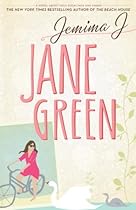
Jemima J


Jemima J is the first book I've read by by Jane Green. Green's name always pops up on Amazon when I look at books by authors I enjoy such as Sophie Kinsella and Jennifer Weiner, so I decided to give her a shot.

Jemima J is partially centered around internet dating. It was published in 1999. That makes it quite hilarious, in ways both intentional and not.

It's quite funny and amazing to think how far we've come in just over 10 years. Jemima and her friends are amazed at this shiny new thing called the internet and they can't wait to get on and try it out. Which takes a while since they're using dial up. No one in the book has a cell phone and they use calling cards for long distance. I remember thinking I was quite cool in high school because there was this boy I had a crush on who lived in Tulsa and got a calling card so he could call me. I thought it was all quite grown up. How much easier a long distance relationship between Tulsa and OKC would be today. I actually did have a cell phone at that time because my parents were totally paranoid about me driving by myself, but it didn't have long distance and I was one of the few teenagers I knew at that time that had one. That would have been my sophomore year of high school, 1997. Robbie and I also e-mailed back and forth with the few AOL minutes we had available. Which seemed so amazing at that time. I sit here looking at what I'm doing online right now and thinking about all of the other things we can do and it's just amazing how quickly it all exploded.

The first thing Jemima and her friends Ben and Geeraldine do online is look up porn simply because they're curious that it really exists out there. It's quite funny reading about them deciding what to type and then waiting patiently while a picture loads line by line. Remember when pictures used to load like that? Then they go to a chat room because that was about the only other thing you could at that time.

And yet how things stay the same. Once there, they create a profile for a young girl and promptly get hit on by an old man. Then Jemima comes back the next day and she and another guy start flirting and suddenly they are internet dating.

Jemima J is a rather large woman at the beginning of the book, but she doesn't want her hottie in LA that she's dating online to know that so they have the graphics guy at the newspaper they work for Photoshop the photo to make her skinny. Then of course the guy wants to meet her. What will she do? The book is about her struggle to lose weight and her huge crush on Ben, one of her coworkers, as well. Will she lose the weight? Will she choose Brad the internet hottie or Ben? Will she be happy?

You'll have to read the book to to find out. Overall, I really enjoyed this book, but there was one thing that would occasionally make me want to reach out and slap Green or perhaps her editor. The book goes back and forth from first person narratives to a third person omniscient narrator. At times this was jarring and felt like Green just couldn't make up her mind on which way to go and did both and for some reason her editor didn't make her pick one. Other times, and especially as a got further into the book, this became quite enjoyable. I like getting both perspectives, and the third person narrator was usually quite funny. I usually like having multiple narrators, but it just didn't flow naturally for me in the beginning of this book. If that annoys you this might not be the book for you. Otherwise, it's a good, quick read that will give you some good laughs and perhaps motivate you to get up and exercise and eat a little better.

Have you read any of Jane Green's other books? Any favorites?

Sunday, August 22, 2010

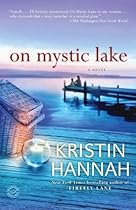
On Mystic Lake


I really love my cats, but sometimes I really don't enjoy being a pet owner. My cats decided they HAD to eat at 5:30 this morning. That's even earlier than I get up during the week. I tried ignoring them, but they sounded like they were breaking the bedroom door down and scratching it so I gave in, then couldn't go back to sleep so I decided to catch up on some blog posts.

I read Kristin Hannah's Firefly Lane last year and loved it so when I saw her On Mystic Lake on sale at The Strand bookstore in NYC in May I picked it up. It's a about a woman who drops her daughter off at the airport for a summer abroad immediately following her high school graduation and when she and her husband get home he promptly tells her he's leaving her for another woman. That's not a spoiler, it's on the back cover and happens on about page 3. Up until that point Annie had a seemingly perfect life and it all comes crashing down on her. She decides to leave LA while her daughter is gone and go back home her small hometown in the Pacific Northwest where she rekindles a romance with a boy from high school.

I read the first half of this book very quickly, on an airplace home from LA actually. At that point I was a fairly captive audience because the other unread books I had with me were more literary and it was very late at night and I couldn't concentrate on those. Once I got home though, the book sat untouched for two weeks. But again, once I picked it back up, I finished it quickly. It's got a nice story and you care about the small town characters. The problem was with Annie. I just didn't identify with her at all. I think most women would though, so take this with a grain of salt.

Annie is completed identified by her husband and daughter. She's lost who she really is and has no life separated from them. I absolutely can't identify with that, but I know that is a common issue for mothers, so this may be a great book for someone going through that. For me, I couldn't understand how she got to that point. I can't fathom losing my identity that way. That's one of the many reasons I don't want kids. This made it hard for me to emphathize with her. I could understand why her husband left, even though he was clearly a jerk and had a lot of other issues himself once we get to know him a little bit better. I'm certainly not saying that he was right to leave her, just that I understand wanting to. I wanted to leave her at several points. I do think a lot of moms would identify with her though, so I don't want to leave the impression that isn't worth reading. It just didn't work well for me. I'm still going to try more of Hannah's books, and I strongly recommend Firefly Lane if you haven't read it.

Monday, August 9, 2010

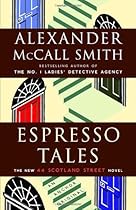
Espresso Tales


I finished Espresso Tales on the way to LA nearly two weeks ago but haven't had a chance to write about it! Oddly enough, I read Alexander McCall Smith's first book in this series, 44 Scotland Street, on a plane as well. They are good for plane rides since the chapters are so short it's easy to find a stopping place for all the frequent interruptions you experience while traveling.

McCall Smith's books all have a cozy feel to them. I sort of just want to hug them. The characters are all so wonderfully flawed and real. Although the coziness is broken by Bertie's evil mother, who I would take delight in torturing. I don't know how you can read about her without feeling the need to slap her on the back of her head. Fortunately Bertie's dad is beginning to stand up for himself, so perhaps the next book will feature her having to cave in on some things.

What's so awful about her? She has these firm beliefs in the fabrication of gender differences and so dresses Bertie in pink pants instead of jeans and paints his room pink. He goes to school for kids with crazy parents who name their kids things like Tofu. He's not allowed to do anything fun. Instead he learns Italian, takes yoga, learns music. He's six. Six! I'm all for focusing on education but wow she doesn't let him have any fun. And he can't go to a birthday party because it's at a bowling alley! Crazy.

And what's craziest of all? She takes Bertie to therapy. Where she and the doctor flirt and can't understand Bertie's problems. Because they all stem from his crazy mother and neither of them want to see that! It's all written so cleverly and is so funny though.

McCall Smith also just pokes in little asides on life and politics and consumerism and people in general that are hilarious. That's what I like most about the books, probably. I can't wait to check out the next one and I hope you all do too if you haven't read him before.

I need a little light-hearted reading right now - any suggestions of other funny books to read?

Saturday, August 7, 2010

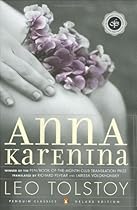
Anna Karenina

I finally finished Anna Karenina! It took much, much longer than usual for me to read, but I loved it! I already wrote a post on the first half if you'd like to check it out.

I think one thing that really struck me in reading the book at this is time is how everyone in it feels trapped. I felt trapped in my own life recently, made a job change, and started my own businsess on the side. You can check out my business and blog on content marketing over at www.sparksmarks.com. I've also jumped on Twitter, so feel free to follow me on Twitter @sparksmarks.

One thing that stayed consistent from my first post is my love for Levin. Seriously, he's now one my most favorite characters ever. I'm a little bit in love with him actually. As he reminds me of my husband I suppose this is good! I love how he works in the fields alongside his workers and respects them and doesn't have the typical aristocratic attitude.

I mentioned last time how he and Anna are foils of each other, which intensified in the second half. Both long for happiness and are searching to find it and think they find it at one point but then realize the were wrong, then both feel trapped but choose very different ways of handling that.

Some spoilers, although I think most people know about the "big" spoiler:
Anna feels trapped in her marriage and finds something she thinks will make her happy in Vronsky. You emphathize with her at this point because she didn't choose her first marriage and you can't help rooting for her to be happy, although the choice of abandoning her son is hard to understand. But leaving didn't make her happy, and having a second child made things worse. I think perhaps she had post-partum depression, understandable as she nearly died in childbirth and was most likely struggling with loving this child when she had abandoned her first. This led to her not bonding with the child. This continued and grew worse, and eventually she loses her mind. She becomes paranoid and feels there's no possibility of happiness for her except in death, leading to her suicide.

Levin, on the other hand, pursues his happiness in his land. He tries to find happiness with Kitty, but she rejects him and so he focuses entirely on his land and tries to believe he can be happy this way. Eventually he realizes he cannot be happy without Kitty and after learning of her change of heart they unite. But even then he still struggled - with fear, with uncertainty, with questions. He too considers suicide at one point, but instead chooses to believe in God and finds happiness that way.

I was surprised at how uplifting the book was in the end since I knew about Anna's suicide going in. I was surprised that it had hardly a ripple affect on the majority of the characters. I was surprised that so much of the book was about Levin. I was surprised that Anna Karenina is now on my top 10 list of favorite books.

Interesting quotes:
"It used to be that a freethinker was a man who had been brought up with notions of religion, law, morality, and had arrived at freethinking by himself, through his own toil and struggle. But now a new type of self=made freethinkers has appeared, who grow up and never even hear that there were laws of morality, religion, that there were authorities, but who grow up right into notions of the negation of everything - that, as wild men."

That rings true to today as well.

"And it occurred to her how incorrect the saying was about a curse being laid upon woman, that in pain she would bring forth children. 'Never mind giving birth, but being pregnant - that's the pain." This passage goes on to have a woman talking about how she was freed when her child died. She was free from the work, the worry, the bondage. Darya is horrified at this, but then thinks about the horrors of pregnancy, childbirth, nursing, sleepless nights, pain, cracked nipples, illnesses. I was surprised to see this addressed this long ago.

Sunday, July 18, 2010

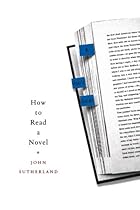
How to Read a Novel


Not quite sure why I picked up a book called How to Read a Novel when I haven't even had time to read lately, but I did. The new job is going well, but I've got a longer commute I'm adjusting to and I'm simultaneously trying to start a new marketing focused blog and co-launch a leadership blog and write a book. And my high school reunion was last night. So it's been a little crazy, and I've clearly lost my mind. I think it's because I have so much more energy since quitting my old job and so I'm going crazy starting new projects but not actually finishing anything. I've even started a half dozen new books instead of finishing the ones I was already reading. Being able to walk to the library on my lunch break isn't helping in that area either. I can walk to our large downtown library and browse and read. Unfortunately I've been doing too much browsing and not enough reading.
One book I did manage to finish this week is How to Read a Novel by John Sutherland. I did enjoy this book, but let me tell you, the title is all wrong. It should be How to Buy a Novel or How to Try to Select Novels or something. Since I flipped through it before checking it out at the library I knew what I was getting, but I can see that being off putting to people if you didn't look inside a little more closely.
Sutherland gives suggestions on what to look for in a novel when you're browsing so you can decide if it's worth devoting your limited reading time too. My favorite tip was to turn to page 69 and read it and if you like it, you'll probably like the whole book. People tend to bring their A game to page 1, and by page 69 they've probably burned out if they're going to or hit their stride.
I'll be honest, most of the rest of the advice was kind of not helpful. He mainly said that you can't really trust anything - not the flap, certainly not the quotes, not reviews, not best seller lists. So, to be honest, I didn't really feel like this book was overly helpful in doing what it was supposed to do - tell me how to select novels I'll enjoy reading. And he seems rather anti-Harry Potter so I hold that against him.
However, I liked the book. Sutherland was at his best when he just rambled about books. He packed in a ton of examples of various books, and I enjoyed reading those portions, getting his take on different things. It made me think I would enjoy reading his book reviews. I think that's really where he is strength is. And I was quite happy to note that his one book he would take to a deserted island (excluding the Bible or Shakespeare) would be Vanity Fair. That's one of my all-time favorite books! I was a little surprised because his book tastes seem to run to the more recent, uber-literary types, so I was excited about his choice and explanation.
I found it interesting that during one of his ramblings, he said he thinks all fiction readers fall into one of two camps: you like either Thackeray or Dickens. He admits you can like both (which I indeed do) but that you'll tend to read books that are more like one or the other. He said Thackeray is more conversational, as though the author is telling you a story. Dickens is more theatrical, where you sit and watch the action unfold. That probably does explain why I do prefer Thackeray, and thinking about it, I do prefer books that are more conversational, like the author is sitting next to you telling a story. Swift does this, and Picoult, and Austen, and the Brontes. Those are some of my favorite authors. The Great Gatsby. I like narrators. With Dickens, you feel a little removed from the story. It's more like watching a play/TV show/movie. That may be why a lot of people don't enjoy him as much these days. I felt that way about the works I've read (which isn't much!) of Faulkner and Woolf.
Well, I feel like this blog post was rather a nice tribute to Sutherland since it rather rambles on as well. I'm not sure if this post is helpful in determining if you'll like this book or not. Maybe if you liked the post you'll like the book and vice versa. Regardless, I hope you find great books to read this week! And let me know what you think about the Dickens vs. Thackeray issue. I'm interested to know what you think!

Thursday, July 8, 2010

Anna Karenina - Part 1


Welcome to today's stop on the Classics Circuit Imperial Russian Literature tour, where I'll be reviewingAnna Karenina. Make sure to check out all of the other stops on the tour as well. I want to apologize for getting this post up late today instead of this morning. I'm trying to adjust to my new job and I haven't quite adjusted my schedule right yet. I also want to apologize for this being part 1 of a review instead of a whole review. I am only halfway through with Anna Karenina. I totally overestimated what I could get done in my time between jobs and trying to deal with all the things associated with a job change. I really just should have started it earlier though. But, it's such a big, dense book that doing two posts is probably a good idea anyway.

Despite my slowness in reading it, I'm loving Anna Karenina. And it's actually not as difficult a read as I expected. It's an interesting story with great characters. It really is a dense book though - lots of stuff going on, pages overflowing with characters, an abundance of details. And it's all meaningful. It's not a book you can read while mentally checking out. You really have to concentrate, which is something I've been lacking lately!

So, why is it worth the read? What they say is true - the Russians truly are the masters of the novel. In Anna Karenina, there are so many characters with overlapping stories that serve as a foil or foreshadowing of other characters and relationships. What surprised me so far is that despite the title and what I've heard back the book, Levin is the character I focus on the most and who seems the most alive. I'm a little bit in love with him actually. He's got his faults and certainly isn't some sort of Prince Charming/Mr. Perfect, but he's intelligent, rational, intense, insightful, and wise. I look forward to getting back to him each time the narration goes elsewhere. I'm rooting for him to live happily ever after. Hopefully his ending is a foil to Anna's!

I've also been surprised at how much I empathize with Anna. Going in, I knew she would cheat on her husband, and I expected to dislike her. I also expected that to happen much later in the book, but it happens right up front. Which makes it more interesting that I'm able to empathize with her. Tolstoy somehow makes you grasp the essence of his characters right from the start. With Anna, you instantly know she's not a bad person. You know her home life isn't happy, that she didn't chose to marry Karenin. That she deserves happiness and isn't going to get it. There is so much foreshadowing through the novel, which is another reason why the book is so dense. Every word could have an impact on later events, every action leads to reactions that resonate through the rest of the novel.

It's hard to describe the way Tolstoy crafts his novels. I feel like when I try to explain why I like them I can't come close to conveying what I mean. Clearly I'm not the wordsmith Tolstoy is. I know his books are intimidating, but I really do recommend giving them a try. Check out the Classics Circuit for other Imperial Russian writers and check back here for part two, hopefully soon!

Friday, July 2, 2010

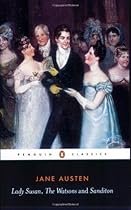
Lady Susan, The Watsons, and Sanditon

It's both quite sad and satisfying that I've now read all of Jane Austen's fiction. I've out on reading Lady Susan, The Watsons, and Sanditon for years. The last time I read a new-to-me Austen novel was seven years ago, during my junior year of college when I read Persuasion. I had actually been holding out on reading that one because I thought that would finish her off, but was assigned it in one of my English classes. So I was quite happy to learn about these other three works.

Lady Susan is a complete short novel Austen wrote early in life. The Watsons and Sanditon are two fragments of unfinished novels. Together, they represent three phases of her writing styles.

Lady Susan is an epistolary novel, a novel written in letters. That form was quite popular in the eighteenth century, especially with writers such as Fanny Burney and Samuel Richardson, both of whose works Austen enjoyed. Austen's first drafts of Pride and Prejudice and Sense and Sensibility were also written in this format, but she revised them later on. Which was definitely a good thing. Although Lady Susan is quite enjoyable, it's not up to Austen's normal abilities. Which is completely understandable since it's an early work, and also because the epistolary novel doesn't stand the test of time as well. Although I personally really enjoyed Evelina by Fanny Burney and Pamela by Richardson, they clearly pale in comparison with Austen's other works. They are highly melodramatic and you have to suspend you disbelief at some of the stretches the author's take to make the form work. I remember writing a paper in the same college class where I read Persuasion about Evelina and Pamela and the epistolary novel's by nature unreliable narrators. You have to think, would a young girl really write that much about a guy she likes to her guardian, a reverend? Is Pamela proclaiming her innocence just because she's writing to parents? But in Lady Susan, Austen keeps the melodrama to a minimum and has the characters write more logically, but this ruins some of the fun of that medium. You also don't get as well-rounded characters, and since Austen has such wonderfully developed characters in her other works you feel like something's missing.

I'm not saying all of that to say I didn't enjoy Lady Susan. I did. Lady Susan is a great villainess, and again is a surprising turn for Austen, but in a good way. She's selfish, mistreats her daughter, flirts constantly, pursues married men, and just generally causes chaos. It's quite fun to read about her and the other characters responses to her. But the story is only about 100 pages, so there's not a lot to dig in to.

In The Watsons, you get more of your typical Austen fare. It's very similar in style and tone to her other novels. I couldn't read about Emma Watson without picturing Emma Watson, otherwise known as Hermione Granger from the Harry Potter movies, playing her. Emma was raised away from her family in the hopes of being an heiress, but that doesn't work out and she comes back home to her family, where some of her sisters are battling to get married so as not to become poor spinsters. Emma attends a ball and we're introduced to several young men who may vie for her hand. For just being a fragment, I really enjoyed this piece and wish it had been developed into a finished piece. In the introduction to my edition, they discuss reasons for this and don't land clearly on anything, but do comment on the fact that the similarities to both Emma and Pride and Prejudice may have caused her to stop writing it. Also, it's the only work dating from her time in Bath, and maybe she just didn't have the motivation to finish while there (she seems to have hated Bath and may not have had the creative power to concentrate there), and then she just didn't want to pick it back up years later after going to Chawton. One of the other interesting bits in the intro was a comparison of this fragment to Cranford. Having just finished Cranford, I thought that was interesting and can see that aspect of a small tight-knit community in both and that the overall tone is fairly similar.

Finally, we have Sanditon. Sanditon is the last piece she was working on before she died. Here you can see the progression from her early novels to the later novels such as Persuasion to something else. There's something darker in this fragment than her other novels, much like Persuasion has a different feel to it. But here there's a feeling that everything may not turn out alright. Mr. Parker is trying to turn Sanditon into the place to be, like Bath. There's a feeling that this might not work out so well hanging over the work. There's also a trio of hypochondriacs in the novel, who Charlotte, the main character, can't stand. Austen's own mother was a apparently a bit of a hypochondriac, and since Austen was most likely dealing her while trying to deal with her own very real illness, she chose to get her feelings out on paper.

Another interesting part of Sanditon is the introduction of a sickly, wealthy mulatto girl, Miss Lambe. I was quite surprised by her appearance, and that she is the richest of a group of students who come to visit Sanditon. I think that's a clue that something quite different was going to happen in this novel had Austen been able to finish it. The introduction says that Miss Lambe could have stepped right out of a Charlotte Bronte novel. So, it's interesting to read Austen's progression from mimicking the eighteenth-century styles, to developing her own, to then trying to build on that and keep pushing her limits and try for something that become more popular later in the century, long after her death. One can only imagine what works she could have pleased us with if she hadn't passed away so young.

If you haven't read these works because they aren't polished and two of them aren't even complete, I recommend that if you like Austen to go ahead and give them a try. It's worth it just for a little bit more Austen and to see her growth as an author through the three pieces.