Wednesday, March 3, 2010

Friday's Child


Hmmm. So I can't seem to get the name of this book right. I keep calling it Friday's Girl. Even when I'm looking at the cover. And that's the name I submitted to The Classics Circuit apparently. Oops. I'm actually reviewing Friday's Child by Georgette Heyer.

If you're a Heyer fan I would turn away now.

I hate to bash a book I read because of The Classics Circuit, and I don't want to cause others to turn away from the rest of the Circuit, so please view my review as just that - MY review. Others seem to be enjoying her, and you might too.

But I didn't. At all. I actually couldn't even force myself to finish it. I tried again tonight to actually finish it before I wrote the review because I didn't think it was fair to bash it when I haven't even read the whole thing. But I just can't take any more.

I hated everything about this book. Her writing. Her language. Her characters. Her lack of any sort of interesting plot. And the fact that she's constantly promoted as some sort of second coming of Jane Austen. How can anyone who has actually read Jane Austen say that?!?! That's completely asinine. She writes about the same time period, and that's the end of the similarities. Her writing style is dreadful. Dreadful! And her language just seems like she's trying to hard. She's billed as being historically detailed, but I feel like she just tried to cram as many random words from the time into each sentence as possible, to the point of being unreadable. (From dreadfulness, not from lack of understanding of the words) And she also uses a lot of words that I've never seen in any books actually from that time period, such as "ton." You see that in every romance novel set in the Regency period, but I've yet to come across it in an actual authentic book of the times. You do frequently see "Beau Monde" though, which means the same thing, or even the full French phrase "le bon ton" but never just "ton". That just seems odd to me, like they're trying to trick readers into thinking they're using words of time period when maybe they aren't and they're just trying to hard.
On to the characters. I read a 129 pages and still would forget who Sherry was. Sherry was the main character. How is it even possible to forget that, especially more than once?!?! I sometimes forgot twice in one sitting! I kept up with War and Peace in a bad translation, so I know that wasn't just poor reading on my part. All of her characters were entirely forgettable, and were either horribly boring or overdone caricatures. I wished I was reading one of those weird Austen-monster books and zombies were going to pop out and eat everyone. None of the characters were likable. They all seemed completely stupid, like the characters in a dumb slasher flick. Shallow, insipid, and boring. And apparently Heyer's known for her characters? I'm so confused. I kept thinking, since I keep getting the title wrong, maybe I've got the wrong author? No? Hmmm.
And finally the plot. Since I didn't care about any of the characters, the plot had little chance of interesting me, but still. It was awful, and fairly non-existent. Which could be fine, but it was written in a way that made it seem like things were happening constantly, because there was no inner portraits of the characters or anything else, only action, but then there was no actual plot to tie the action bits together. And the book starts by seeming to focus on one character, then abruptly switches gears, then switches gears again, sort of. It's just odd, and very disjointed.
If you want to read Regency-era romances about the Beau Monde, read Julia Quinn. She is a million times better than Georgette Heyer. She's a better writer, will make you laugh, creates actually memorable characters, and spins quite entertaining plots. She still uses the word "ton" a ton though. If you're interested in what others have to say about Heyer, check out The Classics Circuit.

Sunday, February 28, 2010

Four-Month Reading Challenge Part Three

She Read a Book is hosting a four-month challenge part three! I'm trying to read the unread books I own this year, so I'm going to try to accomplish this challenge with as few library books as possible.

230/250

5 Point Challenges

Read a book by an author you’ve never read before - The Alchemist

Read a book with a one word title - Cranford

Read a book with an animal name in the title - The Cricket in Times Square

Read a book with a proper name in the title - The Prime of Miss Jean Brodie

Read a fantasy - The Good Fairies of New York

10 Point Challenges

Read an ‘Austenesque’ book - Intimations of Austen by Jane Greensmith

Read a book with a two word title - Big Boned by Meg Cabot

Read a book that is part of a series - Living Dead in Dallas

Read a book about a real person - Fall to Pieces by Mary Forsberg Weiland

Read a mystery - The Weed that Strings the Hangman's Bag by Alan Bradley

15 Point Challenges

Read a book written in the 60’s (any century)- We Have Always Lived in the Castle by Shirley Jackson

Read a book with a number in the title - 100 Worst Bosses by Jim Stovall

Read a book by an author born in March, April, May or June. Her Fearful Symmetry by Audrey Niffenegger - June 13

Read a book with a three word title - Shades of Grey by Jasper Fforde

Read a book by an author with three names - La's Orchestra Saves the World by Alexander McCall Smith

20 Point Challenges

Read a book with over 500 pages - The Three Musketeers by Alexandre Dumas

Read a book with a four word title - Heart of the Matter by Emily Giffin

Read a book by two authors - Nanny Returns by Emma McLaughlin and Nicola Kraus

Read a book written in the 70s (any century)

Read a book that has been number one on the NYT Best-sellers list - House Rules by Jodi Piccoult (March 21, 2010)

Four-Month Challenge Part 2 Wrap-Up

The four-month challenge part two is over! It ran from from Nov. 1, 2009 to Feb. 28, 2010. She Read a Book is hosting the four-month challenge part three if you want to join in for the next round.

I enjoyed participating in this challenge, although I wish had managed to finish it completely. I noticed that only one person actually finished it though, so I'm in good company!

5 Point Challenges
Read a book with a proper name in the title – Chang and Eng by Darin Strauss
Read a book about a queen or king – The Six Wives of Henry VIII by Alison Weir
Read a book by or about/related to a Bronte - I started The Bronte Myth but haven't finished it.
Read a book about Vampires - Dead Until Dark by Charlaine Harris
Read a book by V.C. Andrews – Flowers in the Attic
10 Point Challenges
Read a book by Canadian author – The Sweetness at the Bottom of the Pie
Read a book by or about/related to Charles Dickens - The Man Who Invented Christmas
Read a book set in France - French Milk by Lucy Knisley
Read a book by Georgette Heyer - I started Friday's Child, but haven't finished it.
Read an ‘art’ themed book.
15 Point Challenges
Read a book with a Civil War theme (any country)
Read a book with characters inspired by King Arthur or about King Arthur/Camelot
Read a biography/autobiography – Stolen Innocence by Elissa Walls
Read a book related to or something by Shakespeare
Read a book by an author born in November, December, January or February – Mrs. Dalloway by Virginia Woolf, born Jan. 25
20 Point Challenges
Read a book with a wintery theme (Christmas, snow, ice, freezing, star, camel, mistletoe, etc.)A Christmas Carol
Read a book that was a winner of the Pulitzer Prize for Fiction – Olive Kitteridge by Elizabeth Strout
Read a book that begins with A and one that begins with Z
Read a book from The Modern Library Top 100 – To the Lighthouse by Virginia Woolf
Read a book and then write a review – The Guinea Pig Diaries by A.J. Jacobs

160/250 points

My two favorite books I read for this challenge are Chang and Eng and The Sweetness at the Bottom of the Pie. I absolutely loved both of them!

Saturday, February 27, 2010

Marriage Most Scandalous


Yes, I seriously read a book called Marriage Most Scandalous. And I'm blogging about it instead of keeping it a deep dark secret. Is it weird to anyone else that my mom keeps both my grandmother and I in constant supply of racy romances? Anyone else have a mom who does that? Well, since my grandmother reminds me of the grandma in the Stephanie Plum series by Janet Evanovitch, I don't really know why that still surprises me.
Anyway, I did in fact read, and enjoy!, Marriage Most Scandalous. For the most part anyway. I read it on Monday, which was the day after I got home from my conference. I took a nice long hot bath, which is appropriate since that's what's depicted on the cover, and relaxed with it. I really liked the two main characters and the story had an interesting plot. A man unknowingly sleeps with his best friend's new wife, they duel, man accidentally kills his best friend in duel, and is banished from the country. His pretty neighbor tracks him down years later and convinces him to come home because someone is trying to kill his father. They solve the mystery and fall in love.
I just really wish the book had ended a little earlier. They had a perfectly reasonable plot going, I cared about the characters, and was invested in them, and then she whips out this crazy plot twist that makes zero sense. She had a perfectly reasonable and still somewhat surprising ending going and bam! She throws in all sorts of craziness that completely took away from the heart of the book. And this is why people mock romance novels and soaps. Oh well. It was still exactly what I needed for a relaxing bath and evening after working 16-hour days all week.

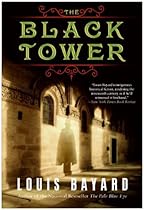
The Black Tower


I have to admit I was disappointed by Louis Bayard's The Black Tower. It had a lot of elements I like: mystery, historical fiction, alternative history, gritty detectives, a likable main character. But I just didn't love it. I didn't dislike it; I think I just had really high expectations that weren't met.
I had read several great reviews for The Black Tower, and many compared it to Matthew Pearl's works, which I love. There's even a quote from Pearl on the back cover singing the book's praises. And Bayard had an essay in Maybe Baby that I enjoyed, so I fully expected to love this book and be enthralled all the way home from San Diego.
But I wasn't. I think the language bothered me and kept pulling me out of the story for one thing. Bayard uses current curse words and some slang terms that startled me as I was reading and took me out of nineteenth century France and into modern America. It's an easy thing to avoid dropping the F bomb, so I was surprised he must have purposely included those and a few other words/sayings. It's a small thing, but it was really distracting.
Although the storyline idea was good - the son of King Louis XVI and Marie-Antoinette was imprisoned during the revolution and was thought to have died in a tower, but this book asks, "what if he didn't die?" Intriguing idea. And it was suspenseful until about halfway through, and then I just wasn't engrossed anymore. I took out my iPod and listened to music for a while and just stared out the window, which I never do on a plane. I had other books with me, but I didn't pick up one of those either, so perhaps I was just exhausted from the conference and not able to focus and it didn't quite get a fair shake. Anyway, I kept flipping back and forth between reading and not-reading it the rest of the trip and finished it just as we hit the runway in Oklahoma City.
Has anyone else read any Bayard? Did I not give him a fair chance? I'm curious since I fully expected to love the book.

Olive Kitteridge

I ended up enjoying Olive Kitteridge, but I must say it's not the best book to select for traveling across the country away from your husband for the week. Although it was more appropriate than The Pilot's Wife, which I also read on a plane traveling away from my husband.
Anyway, Olive Kitteridge is the Pulitzer Prize winner by Elizabeth Strout. It's a series of interconnected short stories. I must admit, my usual perception of short stories is that they are stories that aren't good enough to make into a whole novel or that the author is a bit lazy and just didn't feel like developing it. Clearly, there are exceptions, I enjoy reading Poe for example, and Shirley Jackson. So I realize I'm not being fair, but I still have a tendency to think that. I have an anthology of short stories that I don't even remember buying (I probably got it a library book sale) and have never read, so maybe I'll give them a try to beat down that perception for good.
Olive Kitteridge was a good selection for starting to change my mind about short stories. I enjoyed seeing different sides of certain characters and getting snapshots of life in this small town in Maine. And in reading the author interview in the back of my copy Strout points out that the reader needs breaks from Olive once and a while. The format was also nice for traveling because it was easy to stop at the end of a story during all the starts and stops you have while flying.
Why I say it was not the best choice for reading when I was traveling away from my husband is because it was rather depressing. You can't even count on your own family to be there for you when you're sick or dying. Olive worries about dying alone, and every time I see another statistic on how women live longer than men in the U.S. I worry about that too. And I felt like Strout cut down all of the solutions people turn to to avoid that fate. Olive's son moves away and never visits, friends die, volunteer work doesn't fulfill her the way it's supposed to. In all, I was left with a feeling that it's all hopeless and nothing matters. It just made me want to run to Ryan and give him a big hug and I couldn't do that because I was on a plane to San Diego. Fortunately, since I was on a place to San Diego, I at least had beautiful scenery to greet me and clear my mind instantly.
One last thing - Strout is a master at beautiful, lyrical language. That alone made it worth reading, and it reminded me a bit of Woolf in that sense. But, there were a few times where it was almost too much, and I would think, "Wow, she's really going for the Pulitzer with that paragraph!" Then it became a little distracting. But, overall I did think it was well written and I ended up really enjoying it.

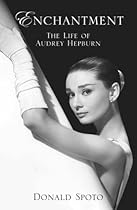
Enchanted


After reading High Society by Donald Spoto and loving it, I picked up Enchantment by him at the library. Enchantment is a biography of Audrey Hepburn, my favorite actress. Since I like Hepburn even more than I like Grace Kelly and I enjoyed Spoto's work, I expected to love Enchantment. But I didn't. Maybe I set it up for failure by expecting too much, or maybe I just lost interest because I was already familiar with Hepburn's life.
My now husband, then boyfriend bought me a book on Hepburn for my birthday the first year we were dating. It's full of beautiful photos and her basic life story. Since it was more about photos, I expected to find out more information from Spoto's book, but I don't feel like I learned much new information, and most of what was new to me was negative. I knew Hepburn had relationships with a few costars such as William Holden, but the book was rather full of affairs and failed relationships. Those were discussed in a rather unflattering manner. I felt like Spoto put Grace Kelly up on a pedestal and tried to knock Hepburn down a bit.
I did enjoy the first few chapters about her childhood. I knew she had suffered as a child during WWII, but this gave many more details than my glossy coffee table book did.
I surprisingly didn't enjoy reading about her movies as much. I think Spoto focused too much on some of the details around the movies that had nothing to do with Audrey to the point where my mind would wander and I would lose interest. I like getting a bit of behind the scenes info, but I felt like he just got off track a few too many times.
I am glad he praised my all-time favorite Hepburn movie, Paris When It Sizzles. It's hilarious, and it's the movie that made me fall in love with her. It doesn't get much press, and when it does it seems like people don't get that it's supposed to campy. She's wonderfully funny in the movie and encourage you to check it out if you haven't seen it.
But for this book, I think there are probably better biographies of Hepburn out there. Spoto has written a ton of old Hollywood biographies, and I will still pick up some of his about people he likes more, such as Alfred Hitchcock. Hitchcock came up frequently in both the Spoto books I read and you can tell Spoto worships him, so I think that would be a stronger book, as well as his biography of Marilyn Monroe. So, I still plan to pick those up some day.